Black horizontal line on a white background
Suspension
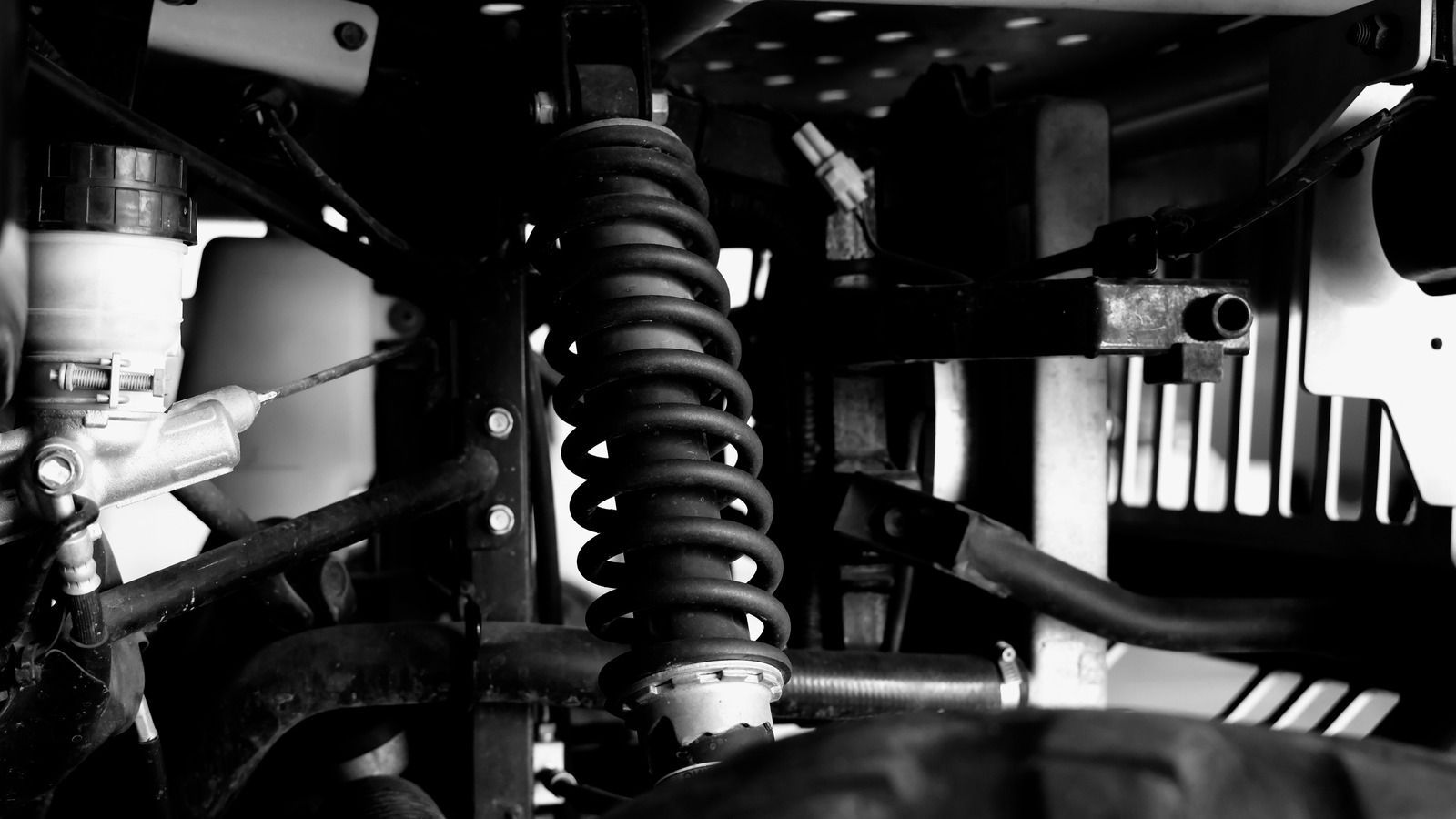
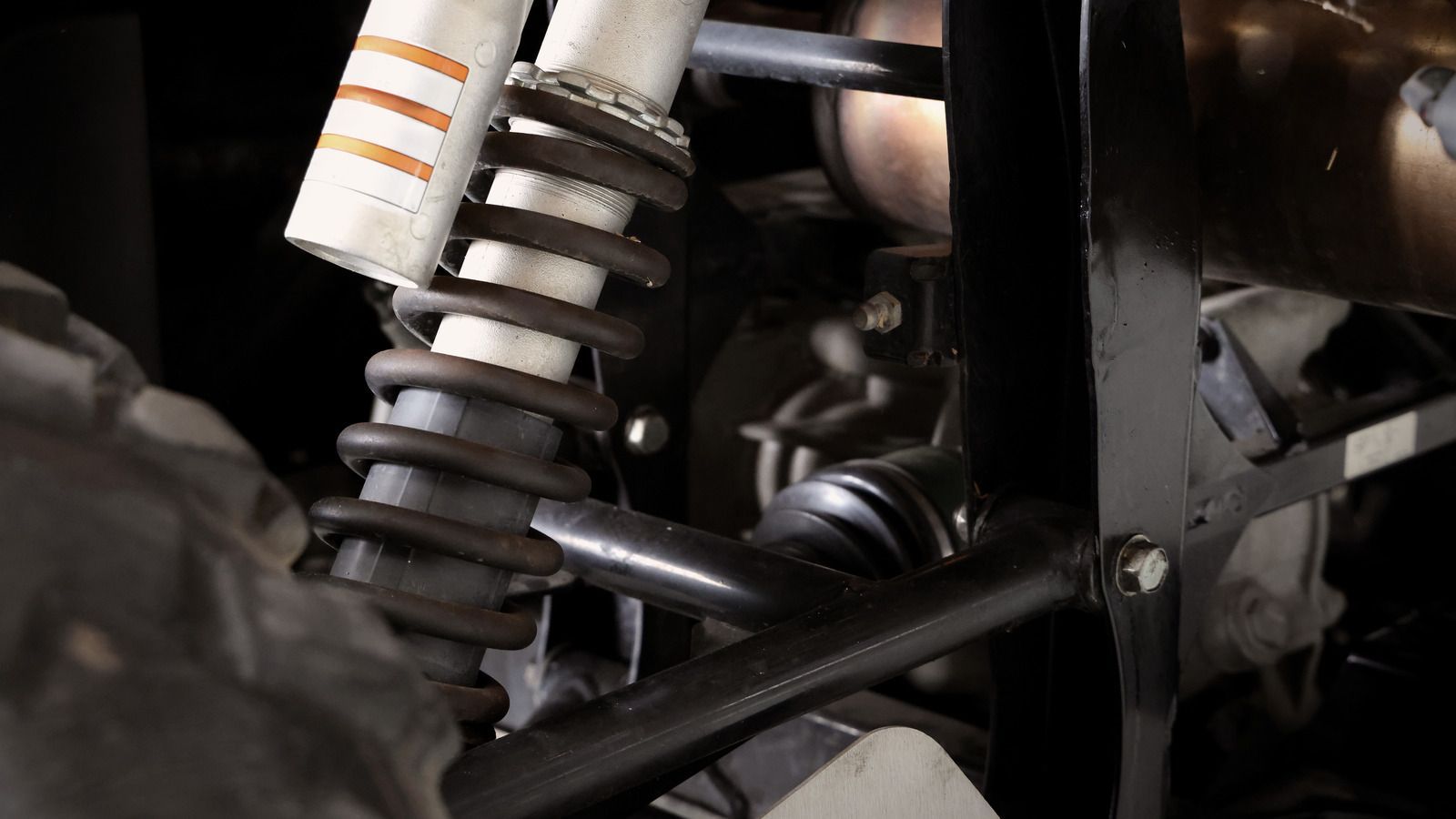
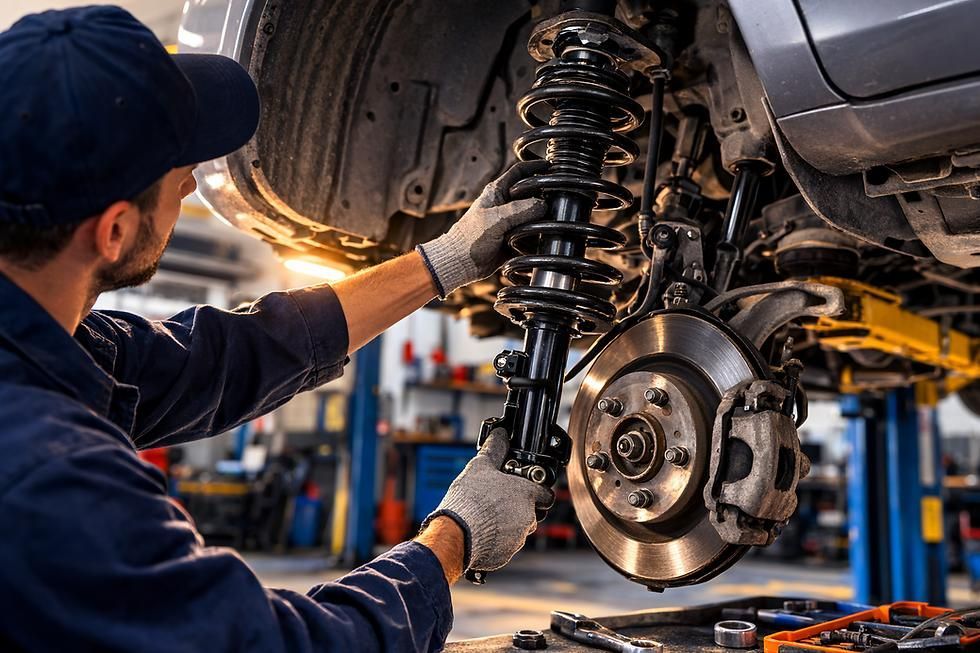
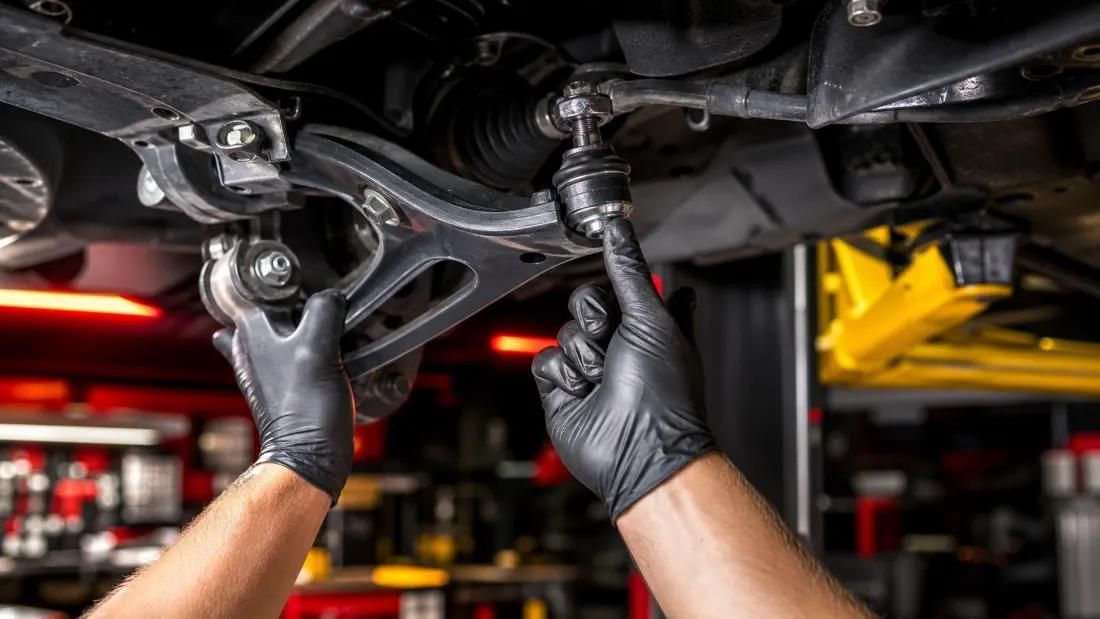
Shocks and struts commonly wear out somewhere between 50,000 and 100,000 miles, and the decline is so gradual that most drivers adjust to it without noticing. At Rubidoux Tire and Brake, our ASE-certified technicians handle suspension repair in Jurupa Valley, CA, on everything from compact sedans to work pickups. Below, we break down the parts we work on underneath your vehicle: shocks and struts, coil springs and strut mounts, control arm bushings, ball joints, tie rod ends, and sway bar links. You will also see what each symptom usually points to, how we confirm the cause before quoting, and why an alignment often follows.
Construction workers pouring concrete at a building site, with a truck in the background
Wet concrete pouring from a truck chute onto a construction site, forming a gravelly slab surface

THE RIDE YOU GOT USED TO IS NOT THE RIDE YOU BOUGHT.

Wear like this sneaks up. A little more bounce after a dip, a lean on the on-ramp, a nose that dives when you brake. Each change is small enough to shrug off, yet together they rewrite how the car handles. We name each change, match it to a part, and show you a photo of that part, so the difference stops being a hunch. Then we sort the list. A torn strut mount or a loose ball joint goes straight to the top. A weeping shock with plenty of damping left can wait, and we tell you so.
  • Symptoms matched to specific parts
  • Photos of every suspect component
  • Urgent repairs separated from later ones
  • No pressure toward extra work
Black horizontal line on a white background
SUSPENSION

TIRES THAT STAY PLANTED, A CABIN THAT STAYS CALM.

Healthy shocks and struts keep each tire pressed against the pavement, which is where steering, braking, and cornering grip actually come from. When damping fades, the tire skips over ripples instead of following them, and contact is lost at exactly the moments you need it most. Restoring the suspension brings back a planted feel at freeway speed, a level stance with a full cargo bed, and tread that wears evenly instead of cupping into scalloped patches.

MIRA LOMA TRUCK TRAFFIC IS HARD ON PAVEMENT AND SPRINGS.

Heavy warehouse traffic around Mira Loma pounds the asphalt day after day, leaving ruts, patched seams, and crumbling edges that every passenger car has to roll across too. Out toward Pedley and Glen Avon, narrower rural streets add soft shoulders and uneven dirt approaches. Plenty of local pickups also tow trailers or haul landscaping loads, and that added weight compresses springs and works shocks far harder than an empty commute ever could.

THE ROAD REVEALS WHAT A WORN SUSPENSION HIDES.

Clunks that only appear on a right turn into a driveway say something different from clunks over speed bumps. After 30+ years under passenger cars and light trucks, our technicians have learned to read those distinctions on the test drive, then confirm them on the lift by loading each joint by hand. Every noise gets traced to a single part before anything is ordered. Hearing a rattle you cannot quite place?

FROM CLUNK TO QUIET, HERE IS HOW.

Black car icon on a lift or jack stand, viewed from the front
WE RECREATE THE NOISE
Tell us where the noise shows up, and a technician drives a short route that reproduces it. Hearing the clunk in the exact driveway or dip where it happens removes guesswork once the vehicle is up on the lift.
Black car on a car lift
WE LOAD AND PRY EVERY JOINT
With the vehicle in the air, we pry on ball joints, rock tie rods, look for hardened or split rubber, and inspect shocks and struts for oil seepage, dents, and damaged mounts. Spring seats and sway bar links get the same scrutiny.
Black car icon on a lift, viewed from the front
WE SHOW YOU THE EVIDENCE
Photos of each problem part come back to you with a ranked list: safety items first, wear items next, and anything that can wait until a later visit. You see the evidence before you ever see a number.
Black car icon on a lift, shown from the front.
WE PUT THE ESTIMATE IN WRITING
California law requires a written estimate and your authorization before repairs begin, and the final bill cannot exceed it without your consent. Ask for the replaced parts back when the estimate is written, and we will set them aside.
Black car icon on a display lift stand, like a vehicle service or inspection symbol
WE TIGHTEN BUSHINGS AT RIDE HEIGHT
Replacement parts go in to manufacturer specifications. Bushing bolts are torqued with the suspension loaded at normal ride height, a small detail that prevents twisted rubber and the early bushing failure that follows when this step is rushed.
Black car icon on a lift or jack stand, front view
WE ALIGN AND ROAD TEST
When the repair affects steering geometry, an alignment follows and you receive the before-and-after readings. A final drive over the same route from the first step confirms the clunk is gone and the steering tracks straight.
Black horizontal line on a white background

our services

OUR SUSPENSION WORK.

Every job below starts with an inspection on the lift, and every part we recommend comes with a photo of its condition. These six repairs account for most of the suspension work that rolls through our bays.
Template premium 99
RIDE CONTROL

Shock and Strut Replacement


We replace shocks and complete strut assemblies by axle pair, matched to your vehicle's original specifications. Complete strut assemblies come with springs and mounts already installed, which saves labor time and restores factory ride height.
Template premium 99
COIL SPRINGS

Coil Springs and Strut Mounts


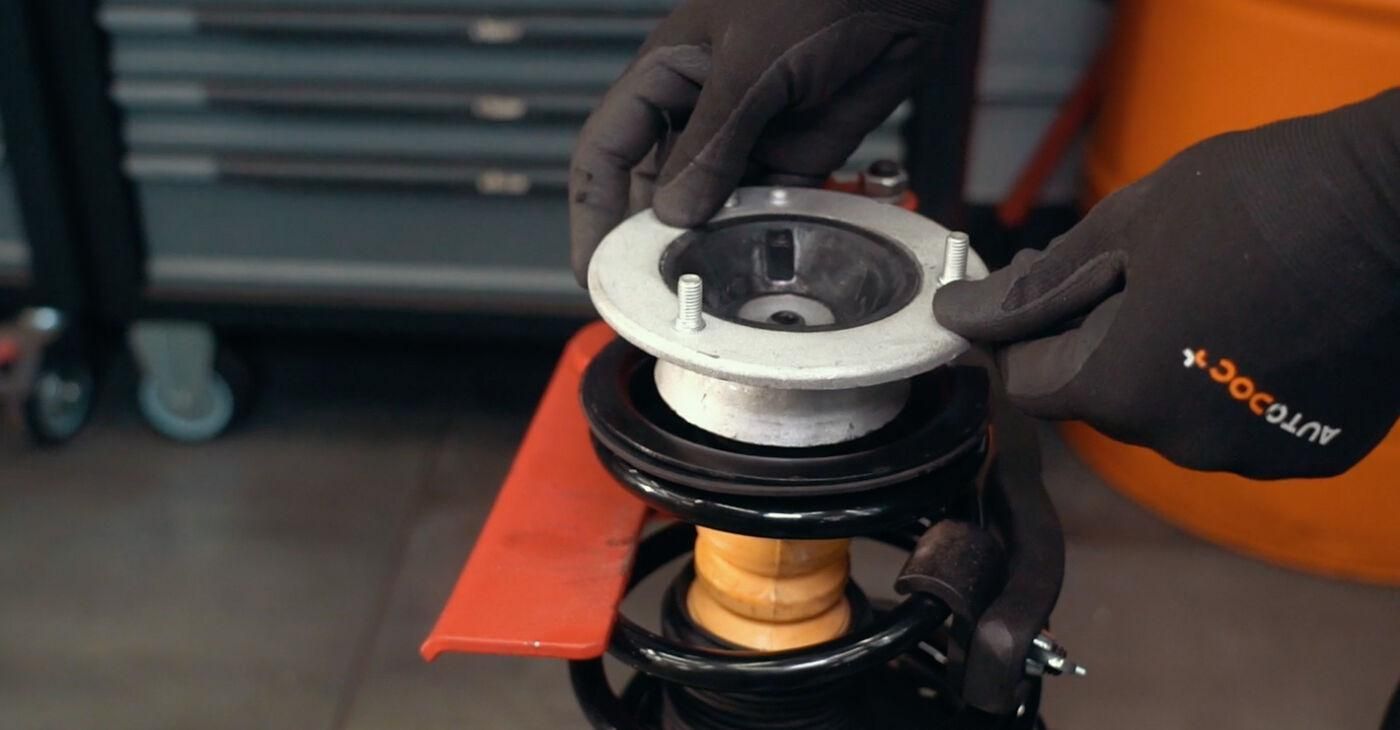
Sagging coil springs lower ride height and change suspension geometry. Strut mounts and their bearings let the front struts pivot as you steer; when they fail, you hear popping or feel binding during slow, tight turns.
Template premium 99
STEERING JOINTS

Ball Joints and Tie Rod Ends


Ball joints carry weight at the steering knuckle, while tie rod ends transfer your steering input to the wheels. Play in either causes wander, clunks, and uneven tire wear, and a separated joint can collapse a wheel.
Template premium 99
ARM BUSHINGS

Control Arm Bushings


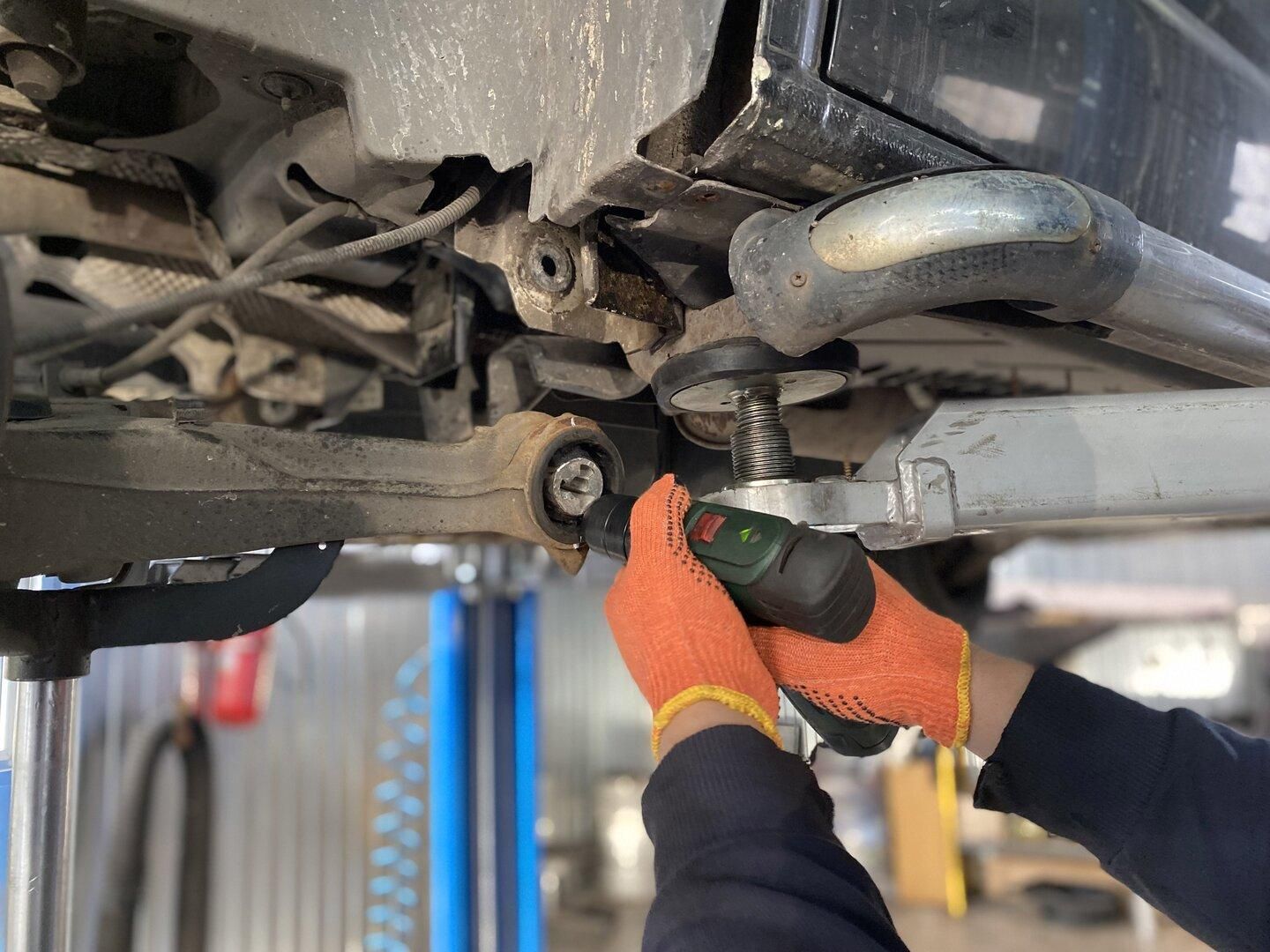
Rubber bushings at the control arms crack and soften with heat and age. Depending on the design and condition, we replace the bushings alone or the complete arm to stop shimmy, clunking, and delayed steering response.
Template premium 99
SWAY BAR

Sway Bar Links and Bushings


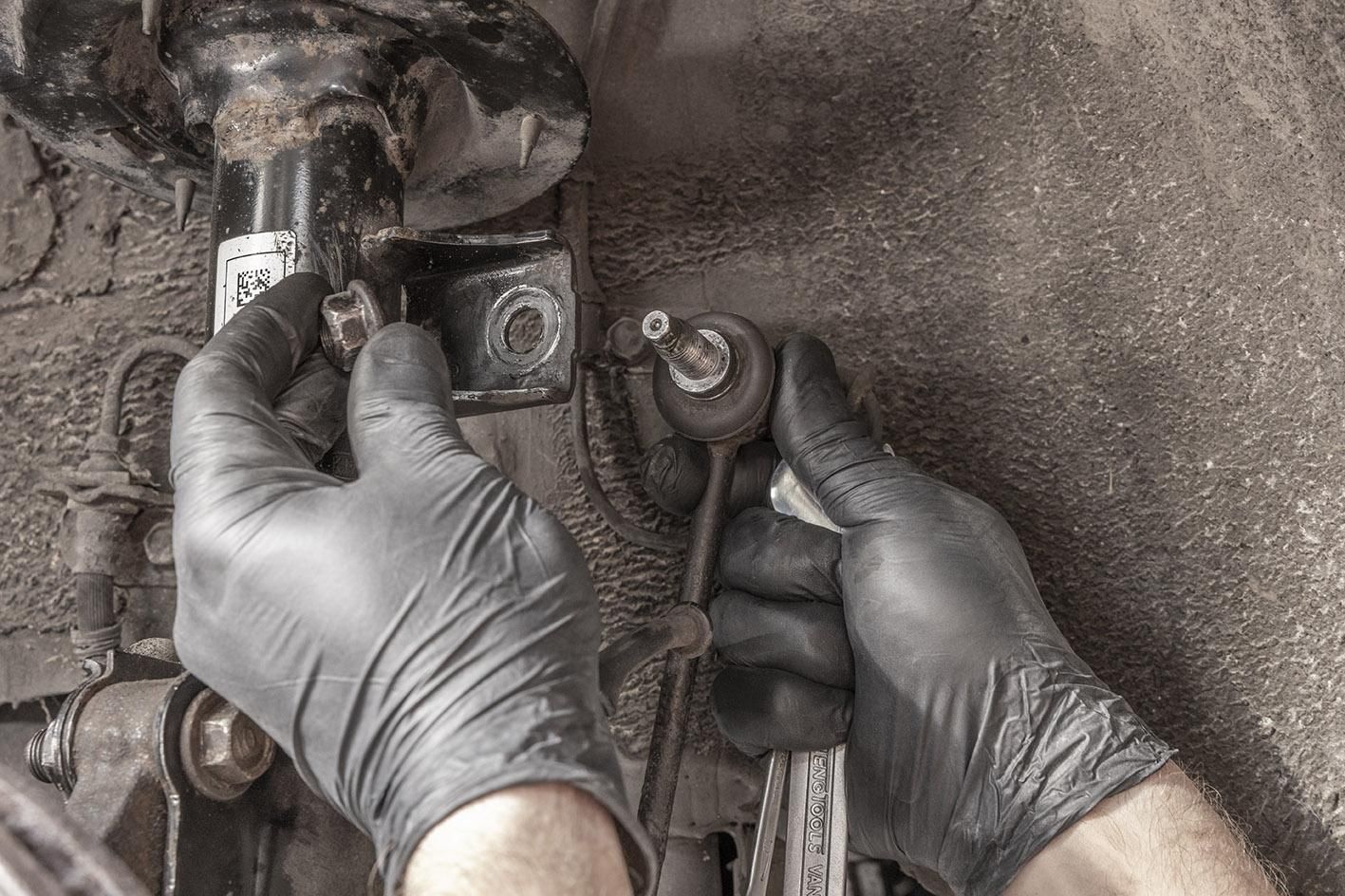
Links and bushings connect the sway bar to the chassis and the suspension. Once they loosen, you hear a knock over potholes and patches and feel extra lean through corners. The repair is usually straightforward and quick.
Template premium 99
LEAF SPRINGS

Rear Leaf Springs and Shackles


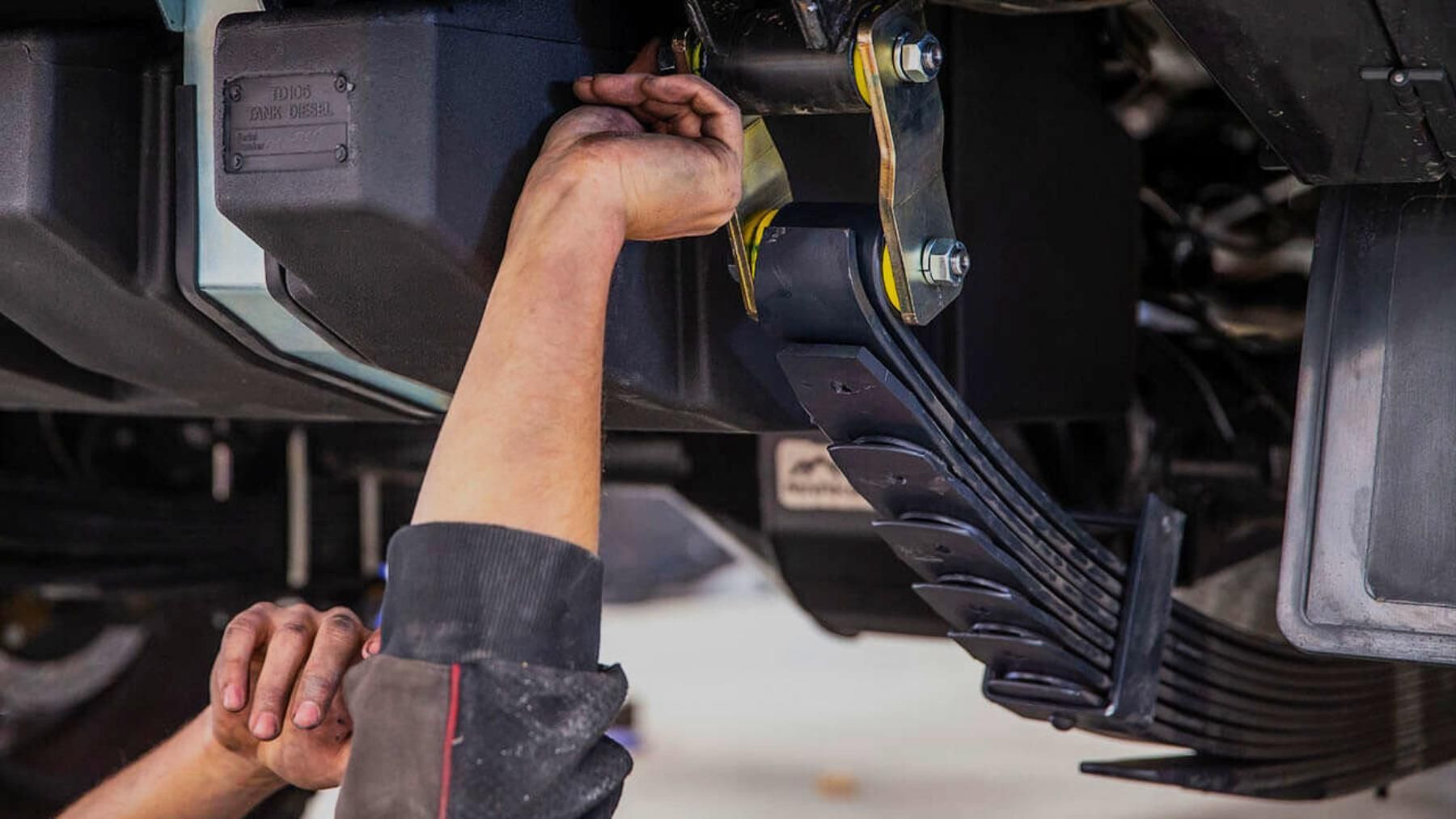
Many pickups and vans ride on leaf springs at the rear axle. We replace cracked or flattened leaves, seized shackles, and dried-out spring eye bushings that cause sagging, squeaks, and a harsh, jolting ride when unloaded.
Black horizontal line on a white background

THE WORD ON OUR WORK

WHAT OUR CLIENTS SAY.

Reviews of our suspension work tend to circle back to two things: the noise is gone, and nobody tried to sell more than the car needed. Customers also mention the photos, which let them see the cracked bushing or leaking strut for themselves before agreeing to anything.
Black horizontal line on a white background.

Common Questions

FREQUENTLY ASKED QUESTIONS.

Most suspension questions start with a sound or a sensation. Here is what we tell drivers at the counter every day, from part terminology to what happens after the new parts go in.

    What is the difference between shocks and struts?

    Struts carry load and shocks do not. A shock absorber only dampens spring motion, while a strut is a structural suspension part that supports vehicle weight and locates the wheel. Many cars use struts up front and shocks in back.

    Should shocks and struts be replaced in pairs?

    Yes, replace them in pairs on the same axle. A new strut on one side and a tired one on the other compress at different rates, so the car leans unevenly, brakes crooked, and feels unpredictable in lane changes.

    What causes a clunk when driving over bumps?

    The usual sources are rattling sway bar links, worn control arm bushings, failed strut mounts, or ball joints with play. A broken coil spring can do it too. Pinpointing the source takes a test drive and a lift inspection.

    Do sway bar links matter if the car still drives fine?

    They matter more than the car lets on. Sway bar links limit body roll in turns and sudden swerves. A broken link usually knocks over rough pavement first, then lets the vehicle lean harder during emergency maneuvers.

    Can bad shocks or struts make it take longer to stop?

    Definitely. Weak dampers let weight pitch forward and the tires bounce, so grip drops during hard braking. The front tires get overloaded while the rears unload, and stopping distance grows, especially on rippled pavement.

    Will my car need an alignment once new struts go in?

    Usually, yes. Removing a strut changes how the knuckle sits, which can shift camber and toe even when every bolt goes back carefully. An alignment afterward protects the new tires and keeps the steering wheel centered at highway speed.

    How does Rubidoux Tire and Brake check ball joints and tie rods?

    Each joint gets checked with the suspension unloaded on the lift, using a pry bar and a rocked wheel to reveal play. At Rubidoux Tire and Brake in Jurupa Valley, CA, you get photos and an explanation of the findings.

    Why choose Rubidoux Tire and Brake for suspension repair in Jurupa Valley, CA?

    Choose us for diagnosis before parts. Rubidoux Tire and Brake brings 30+ years of hands-on suspension work to every vehicle in Jurupa Valley, CA, along with ASE-certified technicians, an A+ BBB rating, bilingual service, and a ranked list of repairs.

    Short black horizontal line on a white background
    The Benefits

    WHAT A HEALTHY SUSPENSION DELIVERS.

    STEP 01

    Shorter, Straighter Stops
    Fresh struts limit nose dive, so weight stays spread across all four tires in a panic stop. The car stops flatter and straighter, which matters most when traffic ahead brakes without warning.

    STEP 02

    Longer Tire Life
    Tired dampers let tires bounce, and that bounce leaves cupped, scalloped tread that hums at speed. Controlling wheel motion protects your tire investment and keeps the tread wearing evenly across its width.

    STEP 03

    Steady Control Under Load
    Springs and shocks in good shape keep the rear from squatting when the bed is full or a trailer is hitched, so the headlights aim correctly and the steering stays light and responsive.

    STEP 04

    Confident Cornering
    Sway bar links and bushings hold body roll in check through ramps and turns. The car responds the moment you turn the wheel instead of leaning, pausing, and only then following along.

    STEP 05

    A Quieter Cabin
    Sloppy joints and dry bushings send clunks, creaks, and rattles right into the seat. Replacing them removes noises you may have tuned out, and the silence is obvious on the first drive home.

    STEP 06

    Protection for Connected Parts
    Any failing component overloads the parts around it. Catching a split bushing early can spare a control arm, a CV axle boot, or a fresh set of tires from premature wear.