Black horizontal line on a white background
AC Service
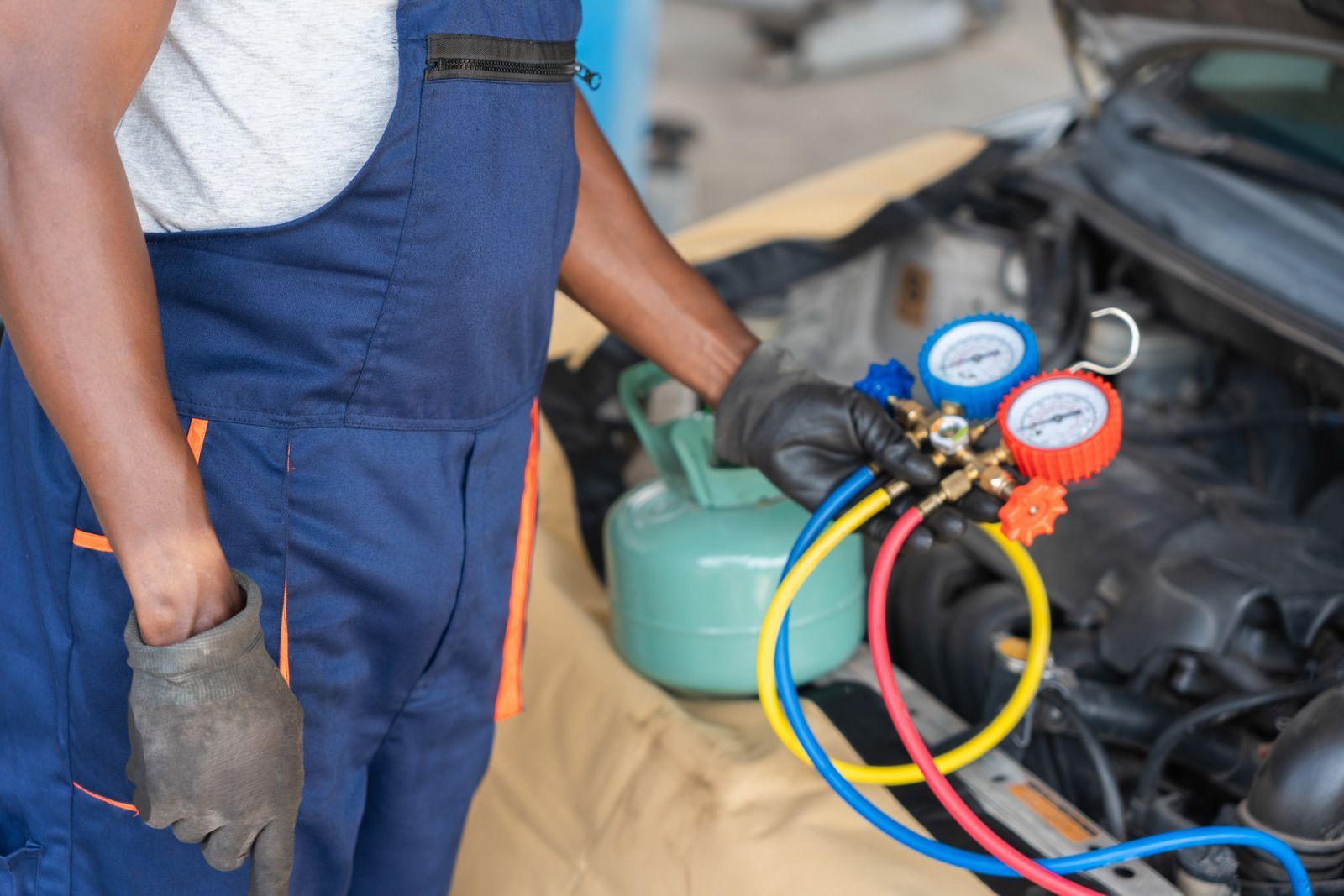
Federal rules under Clean Air Act Section 609 require certified technicians and recovery equipment for every vehicle air conditioning job, and venting refrigerant into the open air is illegal. Rubidoux Tire and Brake provides AC service in Jurupa Valley, CA on older R-134a systems and the newer R-1234yf systems found in many late-model vehicles. Covered here: leak detection, refrigerant recovery and recharge, compressor and clutch repair, condenser and evaporator replacement, blower motor and blend door diagnosis, and cabin air filter service. With 30+ years behind us, we track down why the cooling faded instead of simply topping off the system and sending you back into the heat.
Construction workers pouring concrete at a building site, with a truck in the background
Wet concrete pouring from a truck chute onto a construction site, forming a gravelly slab surface

REFRIGERANT DOES NOT GET USED UP. IT ESCAPES.

An AC system is sealed. Unlike oil or gasoline, refrigerant is never consumed, so a system running low has a leak somewhere, whether at an O-ring, a hose crimp, the compressor shaft seal, or a condenser punctured by road debris. Adding more without finding that leak buys comfort for a while at best, and then the vents go lukewarm again. Locating the source first saves money over the life of the car. We find the leak, show you where it is, and repair it before a single ounce of refrigerant goes back in.
  • Leak located before any recharge
  • Refrigerant recovered, never vented
  • R-134a and R-1234yf systems serviced
  • Vent temperature measured, not guessed
Black horizontal line on a white background
AC SERVICE

WORKING AIR CONDITIONING MAKES THE DRIVE SAFER, NOT JUST NICER.

Air conditioning does more than keep you comfortable. Running the compressor pulls moisture out of the cabin air, which is why the defrost setting uses it to clear a fogged windshield on damp mornings. A driver baking in a sweltering cabin also loses focus faster in heavy traffic. A healthy system means clear glass in winter, an alert driver in summer, and a back seat where kids and pets can ride without overheating.

96 DEGREES OUTSIDE MEANS NO DAYS OFF FOR THE COMPRESSOR.

Summers in Jurupa Valley, CA bring August normal highs near 96 degrees, and a commute stretching across Highway 60 or I-15 keeps the compressor cycling for extended stretches with little rest. Dry, dusty conditions add a second load. Fine grit packs into cabin air filters and coats the condenser fins up front, choking airflow until the vents blow merely cool when the thermometer outside says otherwise.

REFRIGERANT LEAKS HAVE RUN OUT OF PLACES TO HIDE.

Pinholes in condensers, weeping Schrader valves, evaporators cracked behind the dashboard, compressor seals that only leak once the system gets hot: we have found them all. UV dye, electronic detection, and pressure testing each catch different kinds of leaks, and knowing which method fits which symptom comes from 30+ years in the bays. Has your system been recharged more than once and still keeps losing its chill?

FROM WARM VENTS TO COLD AIR, HERE IS HOW.

Black car icon on a lift or jack stand, viewed from the front
WE MEASURE THE VENT TEMPERATURE
Placing a thermometer in the center vent gives us a baseline reading with the engine running and the AC on max. That number, compared against outside temperature and humidity, shows how far the system has drifted from where it should be.
Black car on a car lift
WE READ THE PRESSURES
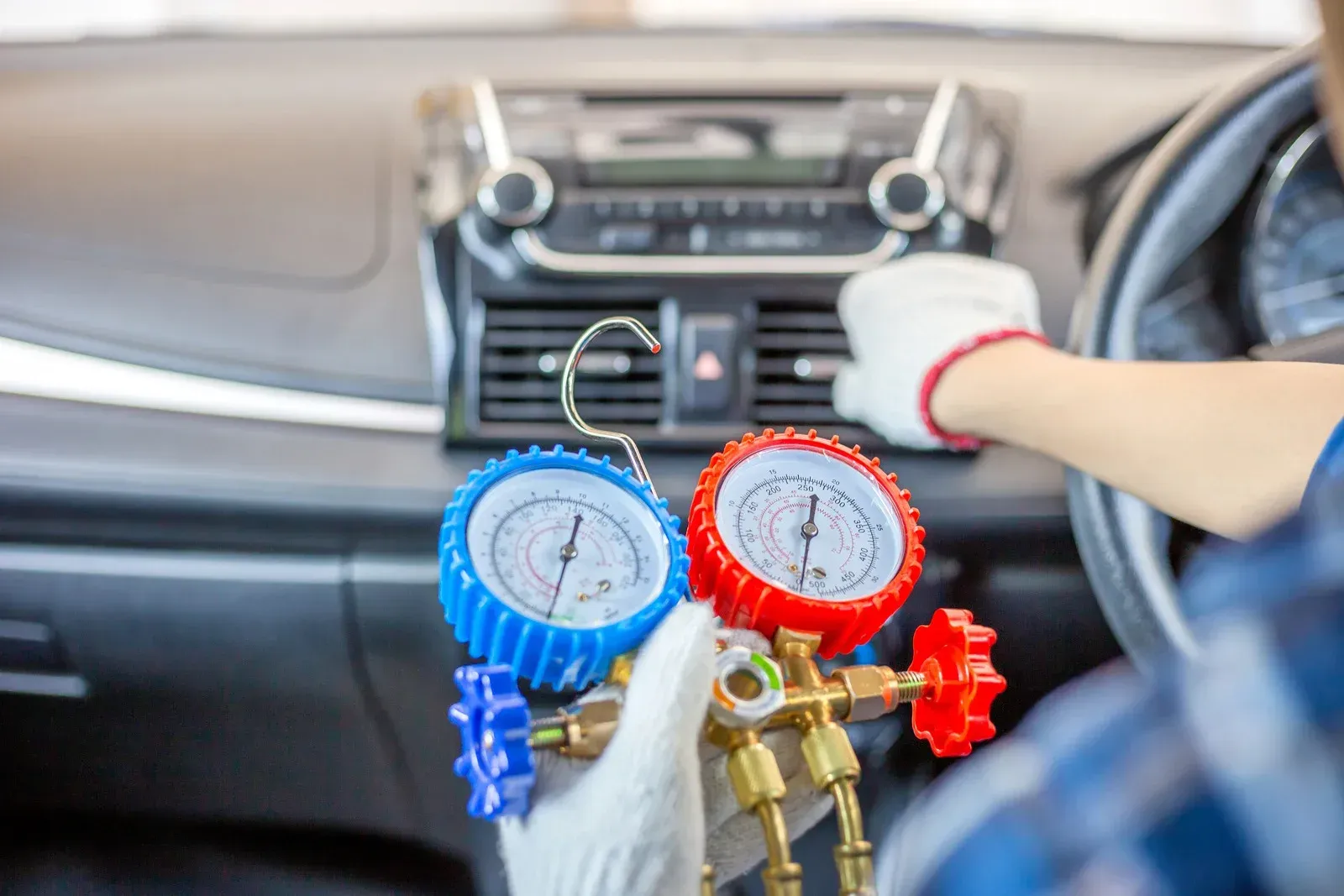
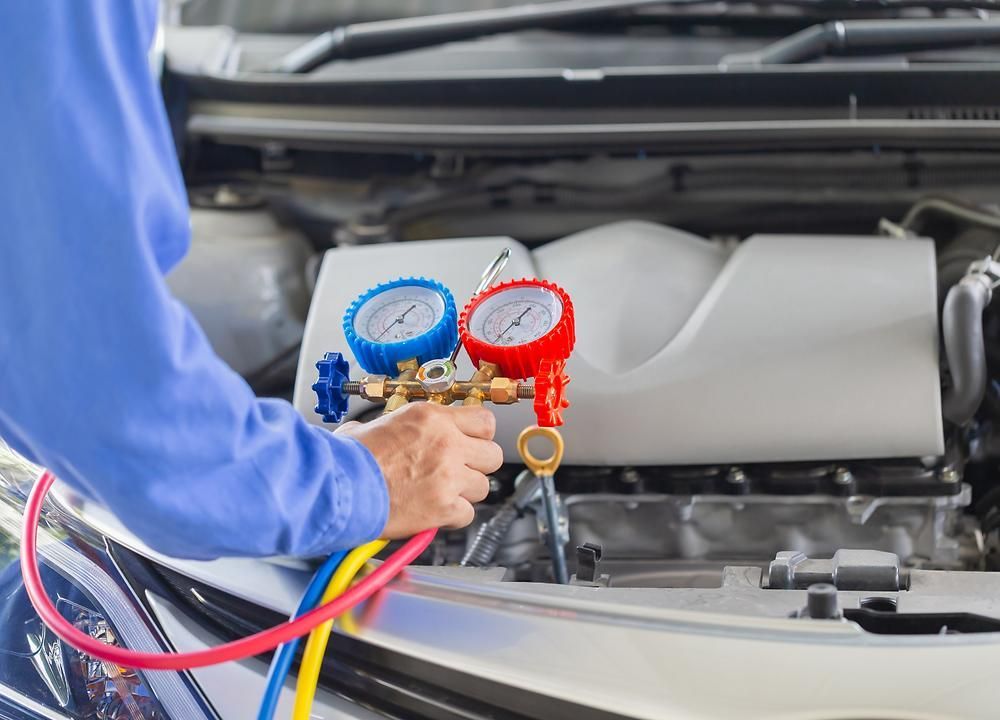
Gauges on the high and low sides reveal whether the system is undercharged, overcharged, restricted, or dealing with a weak compressor. We also confirm that the clutch engages and that the condenser fan runs when it should.
Black car icon on a lift, viewed from the front
WE HUNT DOWN THE LEAK
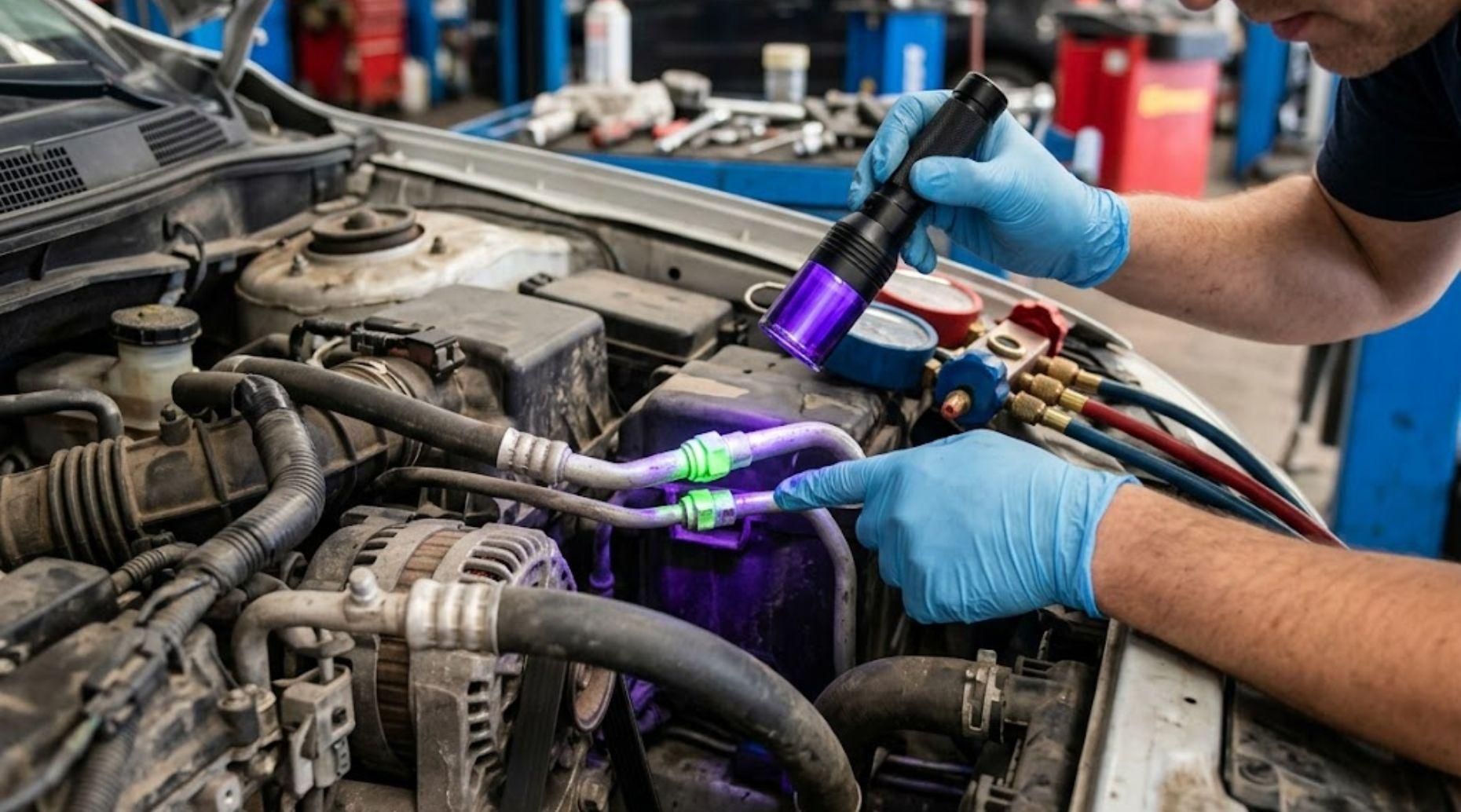
Using dye, electronic detection, or a pressure test, we trace refrigerant loss back to its source. You get a photo of the leak point along with a clear explanation of which part has failed and why.
Black car icon on a lift, shown from the front.
WE PUT THE PLAN IN WRITING
Your estimate lists the parts, the refrigerant type, and the labor, with urgent repairs separated from those that can wait. Nothing proceeds until you approve it, exactly as California repair law requires of every shop.
Black car icon on a display lift stand, like a vehicle service or inspection symbol
WE REPAIR, EVACUATE, AND RECHARGE
Once the faulty part comes out and its replacement goes in, the system goes under vacuum to remove air and moisture. It then receives the precise weight of refrigerant listed on the under-hood label, never an estimate from a gauge reading.
Black car icon on a lift or jack stand, front view
WE VERIFY THE CHILL AT THE VENTS
One last vent temperature reading confirms the drop, and a leak check on the repaired area confirms the fix holds tight. Those numbers go on your paperwork so you have something to compare against next summer.
Black horizontal line on a white background

our services

OUR AC SERVICE WORK.

Cooling problems usually come down to one of four areas: the refrigerant charge, the compressor, a heat exchanger, or the controls that route air through the cabin. These six services cover each of those areas on cars and light trucks.
Template premium 99
LEAK DETECTION

Leak Detection and Repair


UV dye, electronic leak detection, and pressure testing pinpoint where refrigerant escapes. Once the source turns up, we replace the failed O-ring, hose, valve, or component, then confirm the system holds pressure before recharging.
Template premium 99
SYSTEM RECHARGE

Evacuation and Recharge


Remaining refrigerant gets recovered, the system is pulled into a deep vacuum to boil off moisture, and the charge weight listed on the manufacturer's label goes back in, whether the system runs R-134a or R-1234yf.
Template premium 99
COMPRESSOR REPAIR

Compressor and Clutch Service


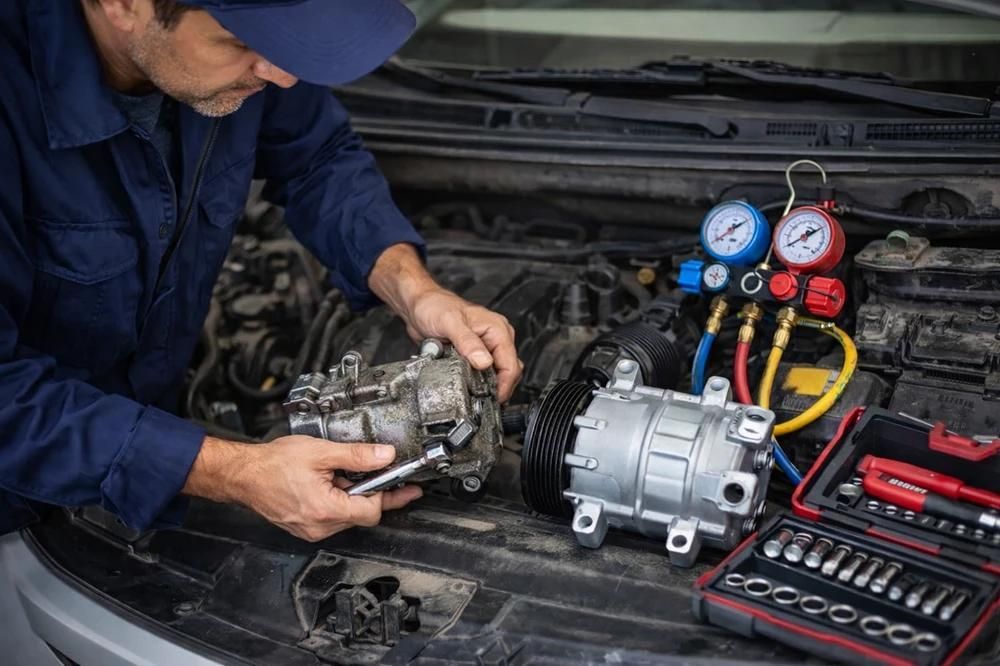
A compressor that will not engage, a clutch with an excessive air gap, or a seized unit each gets diagnosed first. Compressor replacement includes flushing debris from the lines and installing a new receiver drier or accumulator alongside it.
Template premium 99
HEAT EXCHANGERS

Condenser and Evaporator Replacement


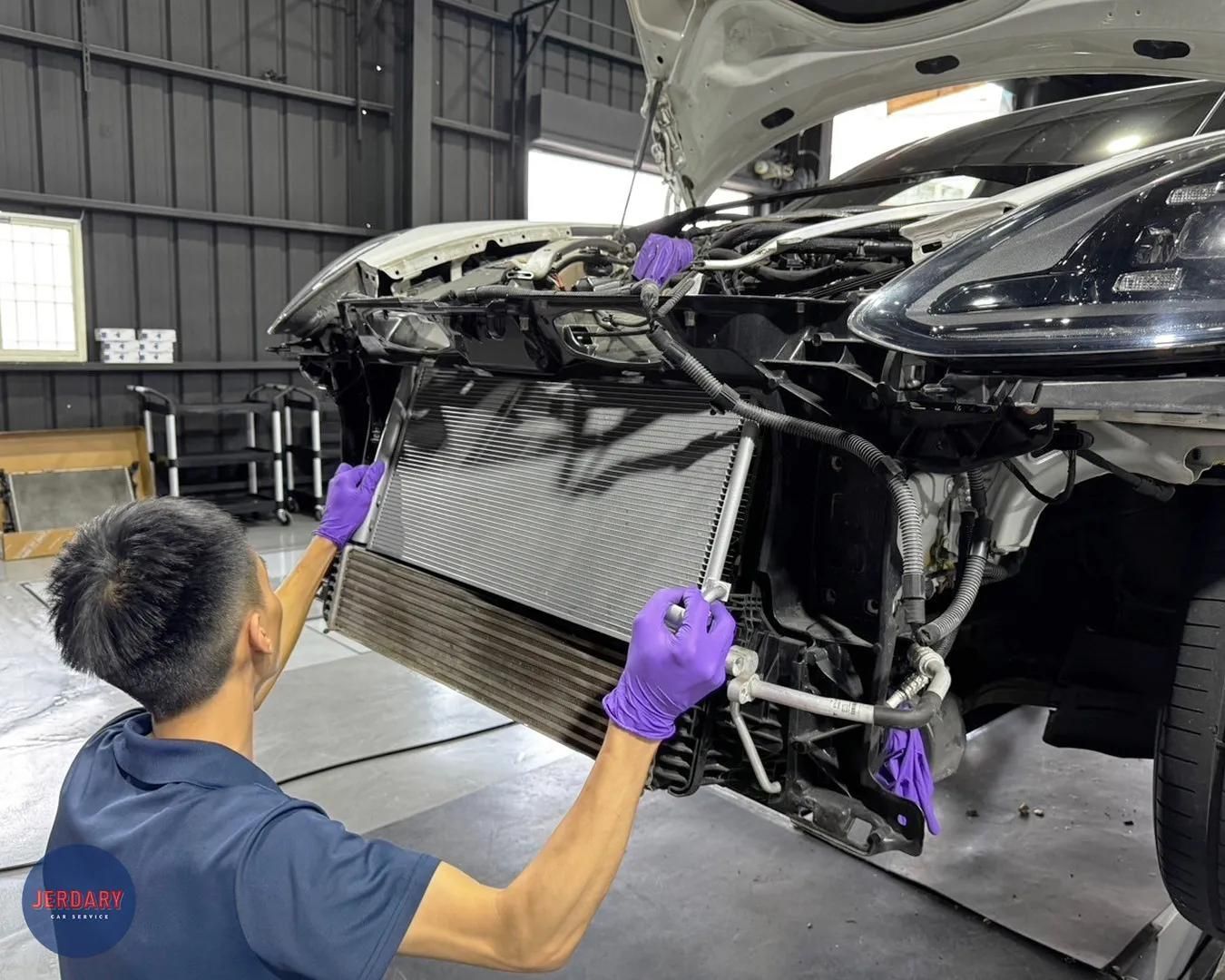
Condensers punctured by road debris and evaporators corroded from the inside both lose refrigerant and cooling capacity. We replace either unit and flush the system so contamination does not damage the replacement parts.
Template premium 99
CABIN CONTROLS

Blower Motor and Blend Door Repair


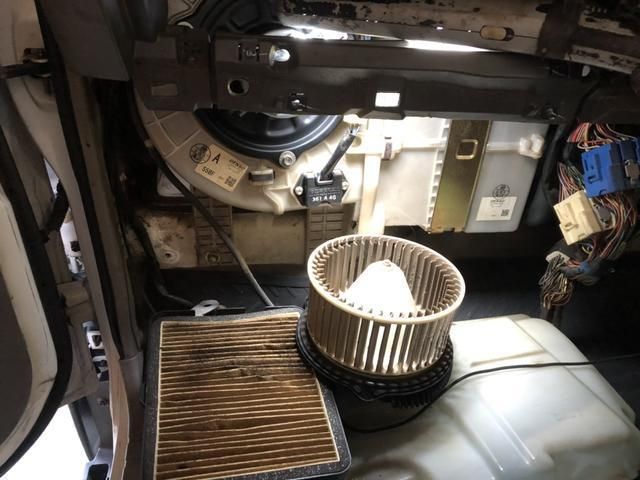
Weak airflow, a fan speed that refuses to work, or warm air on one side and chilled air on the other usually trace to a blower motor resistor, the motor itself, or a stuck blend door actuator.
Template premium 99
AIR QUALITY

Cabin Air Filter Replacement


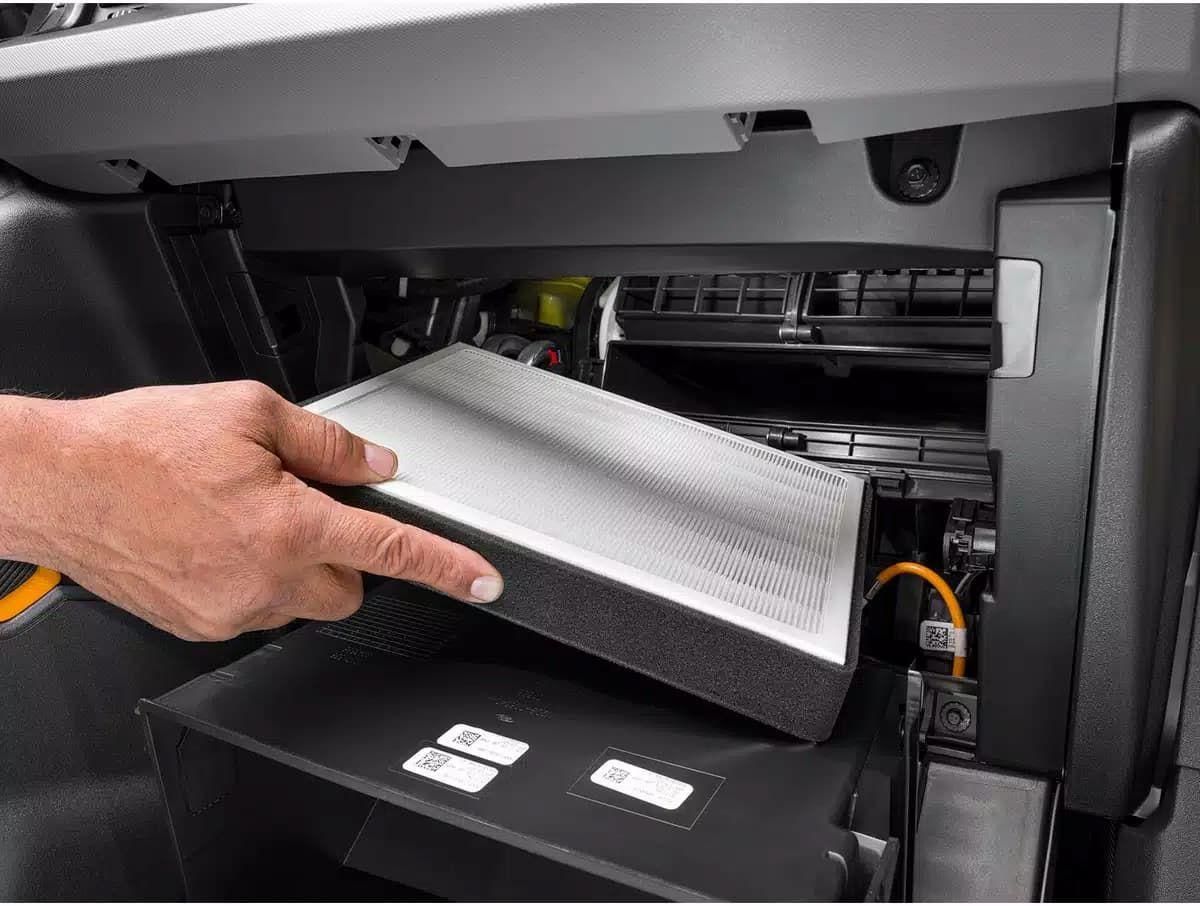
Clogged cabin filters restrict airflow and can make the system feel underpowered even with a full charge. We replace the filter and, when the vents smell musty, treat the evaporator to remove mold and bacteria buildup.
Black horizontal line on a white background

THE WORD ON OUR WORK

WHAT OUR CLIENTS SAY.

What people remember most is being shown the leak. A glowing trace of dye on a hose fitting, or a photo of a corroded condenser, turns a vague repair bill into something you can see. Customers also mention being steered away from yet another recharge.
Black horizontal line on a white background.

Common Questions

FREQUENTLY ASKED QUESTIONS.

AC repair attracts plenty of guesswork from parts store aisles and online forums. These answers clear up the questions that land on our counter most often once summer arrives.

    Should I recharge my AC or repair it?

    Repair first in almost every case. Because refrigerant does not get used up, an undercharged system means a leak exists somewhere. A recharge alone treats the symptom, and that same leak will slowly drain the replacement refrigerant too.

    How long should an AC recharge last?

    A sealed system should hold its charge for years, not seasons. Needing a recharge every summer means a leak has never been repaired, and each top-off simply refills a system that keeps losing refrigerant.

    Are DIY AC recharge cans a good idea?

    Generally no. Store cans cannot measure the charge by weight, so overcharging is common, and some contain sealers that can clog components and contaminate shop recovery machines. They also do nothing about the leak itself.

    What is R-1234yf refrigerant?

    R-1234yf is the refrigerant many newer vehicles use in place of R-134a, chosen for its much lower global warming impact. Each system is designed for one or the other, with its own service fittings and equipment.

    Why does my AC smell musty when I turn it on?

    That odor usually comes from mold or bacteria growing on the evaporator, which stays damp after the system shuts off. Replacing the cabin filter and cleaning the evaporator typically clears up the smell for good.

    Does running the AC hurt fuel economy?

    Yes, somewhat. The compressor draws power from the engine, so mileage dips a bit with the AC on, especially in city driving. A properly charged system with a clean condenser keeps that penalty as small as possible.

    Should my AC compressor click on and off this often?

    Some cycling is expected, but rapid clicking every few seconds points to a short refrigerant charge or a pressure switch fault. Rubidoux Tire and Brake reads the system pressures to sort that out for drivers in Jurupa Valley, CA.

    Why choose Rubidoux Tire and Brake for AC service in Jurupa Valley, CA?

    Both R-134a and R-1234yf systems get serviced at Rubidoux Tire and Brake by ASE-certified technicians who recover refrigerant as federal law requires. Customers in Jurupa Valley, CA see the leak and receive a written estimate in English or Spanish.

    Short black horizontal line on a white background
    The Benefits

    WHAT A LEAK-FREE AC SYSTEM DELIVERS.

    STEP 01

    Cooling That Lasts All Season
    Fixing the leak instead of topping off means the refrigerant charge holds. You stop paying for a recharge every spring, and the system keeps working through the hottest weeks of the year.

    STEP 02

    A Compressor That Lives Longer
    Compressor oil travels with the refrigerant, so a low charge also starves the compressor of lubrication. Restoring the full charge keeps it protected, and it is the priciest part in the system.

    STEP 03

    Clearer Windshields
    The AC dries the air that the defroster blows across the glass. A healthy system clears fog quickly on cool, gray mornings, which matters for visibility during the overcast months of the year.

    STEP 04

    Fresher Cabin Air
    Swapping in a new cabin air filter and cleaning the evaporator cuts down on dust, pollen, and that musty smell from the vents, so allergy season and windy days are easier to tolerate.

    STEP 05

    Less Strain on the Engine
    Correctly charged systems with debris-free condenser fins cycle less often, which reduces the load on the engine and the cooling system during steep climbs and while idling in heavy traffic.

    STEP 06

    Refrigerant Kept Out of the Atmosphere
    Recovered refrigerant goes into certified recovery equipment instead of the open air. That follows federal law, and it means your car's repair adds nothing to the emissions problem.