Black horizontal line on a white background
Brakes
Since January 1, 2025, every brake pad sold in California must contain no more than 0.5% copper by weight, and the box carries a LeafMark "N" to prove it. At Rubidoux Tire and Brake, compliant friction material is standard on every job we do for brakes in Jurupa Valley, CA. This page walks through what that work involves: pads and shoes, rotor resurfacing or replacement, caliper and slide pin service, brake fluid exchanges, and the hoses and steel lines that carry pressure to each wheel. ASE-certified technicians measure pad and rotor thickness before recommending anything, so your estimate reflects the parts on your car rather than a generic package.
Construction workers pouring concrete at a building site, with a truck in the background
Wet concrete pouring from a truck chute onto a construction site, forming a gravelly slab surface

MEASUREMENTS FIRST, RECOMMENDATIONS SECOND.

Brake work invites upselling because most drivers cannot see their pads without pulling a wheel. We flip that dynamic. Every inspection ends with pad thickness in millimeters, rotor readings compared against the minimum stamped on the casting, and photos of anything worn or leaking. You see what we see, from the same angle, before a single part goes on the order. Then comes the sorting. A seized slide pin needs attention today, while pads at half thickness can ride until your next oil change. Financing is available when a bigger repair cannot wait.
  • Pad thickness measured, not guessed
  • Photos of every failing component
  • Urgent versus can-wait priority list
  • Written estimate before work starts
Black horizontal line on a white background
BRAKES

SHORTER STOPS, CALMER COMMUTES, FEWER SURPRISES.

Healthy brakes are mostly invisible. The pedal sits firm at the same height every morning, the car tracks true when you lean on it, and nothing squeals at the light by the grocery store. Keeping things that way costs far less than rescuing a system after metal meets metal, which usually means replacing rotors, sometimes a caliper, and occasionally a tow you never planned on. Catching wear early keeps the repair small and the bill predictable.

MISSION BOULEVARD LIGHTS AND HIGHWAY 60 BACKUPS EAT PADS.

Stop-and-go driving is the hardest duty a brake system sees, and local commutes deliver plenty of it. Signal after signal along Mission Boulevard, then the crawl on Highway 60 toward Riverside, CA, means the pads clamp dozens of times per trip. August highs around 94 to 96 degrees add heat the rotors cannot shed quickly. Overheated pads glaze, the pedal travels farther, and stopping distance stretches. Mechanics call that pattern brake fade.

30+ YEARS OF STOPPING CARS ON MISSION BOULEVARD.

Across 30+ years on Mission Boulevard, we have seen brake trouble appear in every form: the commuter sedan with pads worn to the backing plate, the work truck with a caliper frozen from sitting, the minivan whose pedal sank because nobody had changed the fluid since it left the lot. That history teaches us where to look first and which noises are harmless. Want a second set of ears on that new sound before it gets louder?

FROM THE FIRST SQUEAL TO THE ROAD TEST, HERE IS HOW.

Black car icon on a lift or jack stand, viewed from the front
WE LISTEN TO THE NOISE
Describe what you hear and when it happens: cold mornings, sudden stops, slow rolls into a parking space. Those details narrow the search before the car leaves the ground, and a short drive together often reproduces the sound right away.
Black car on a car lift
WE PULL EVERY WHEEL
With the vehicle on the lift, our technician removes the wheels and inspects pads, rotors, calipers, hoses, and drums at all four corners. Problems rarely stay on one axle, so checking only the noisy side misses half the story.
Black car icon on a lift, viewed from the front
WE MEASURE AND PHOTOGRAPH
Pad thickness, rotor thickness, and runout get recorded as numbers. Anything cracked, leaking, or past spec gets photographed, so the images on your phone match exactly what our technician is holding in the bay at that moment.
Black car icon on a lift, shown from the front.
WE WRITE THE ESTIMATE
California law requires a written estimate and your authorization before repairs begin. Ours ranks each item as urgent or able to wait, and the total cannot grow without your consent. Ask for the old parts back if you want them.
Black car icon on a display lift stand, like a vehicle service or inspection symbol
WE REPLACE AND BLEED
Approved parts go on with new hardware, cleaned contact points, and correct torque on every caliper bolt. Whenever the hydraulic system has been opened, we bleed it thoroughly so the pedal feels solid before the car ever moves.
Black car icon on a lift or jack stand, front view
WE ROAD TEST THE RESULT
Our technician drives the vehicle through light and heavy stops to bed the pads and confirm a straight, quiet stop. Only after that test do we hand back the keys and walk you through the invoice line by line.
Black horizontal line on a white background

our services

OUR BRAKE WORK.

Pads are only one piece of the system. Each item below is a separate task with its own wear pattern, and your estimate lists only the ones your inspection turned up, with photos attached to explain why each made the list.
Template premium 99
FRICTION MATERIAL

Brake Pad Replacement


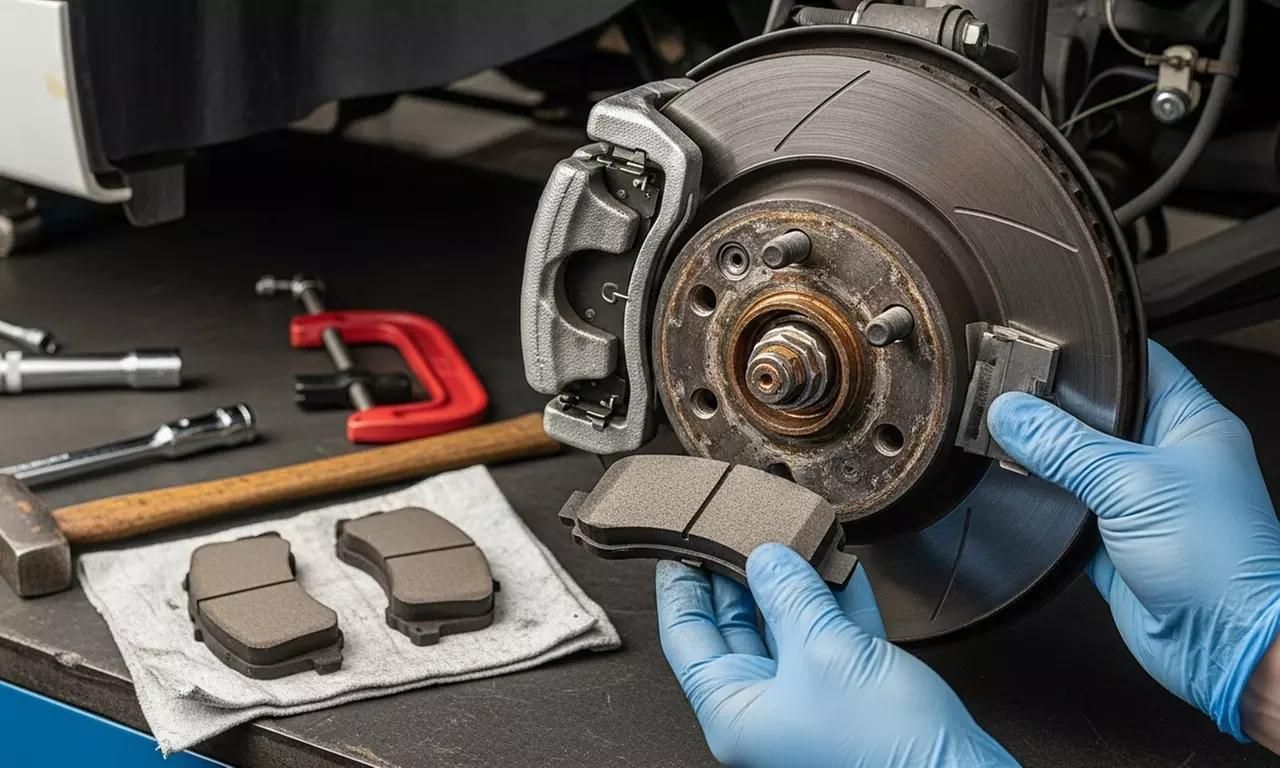
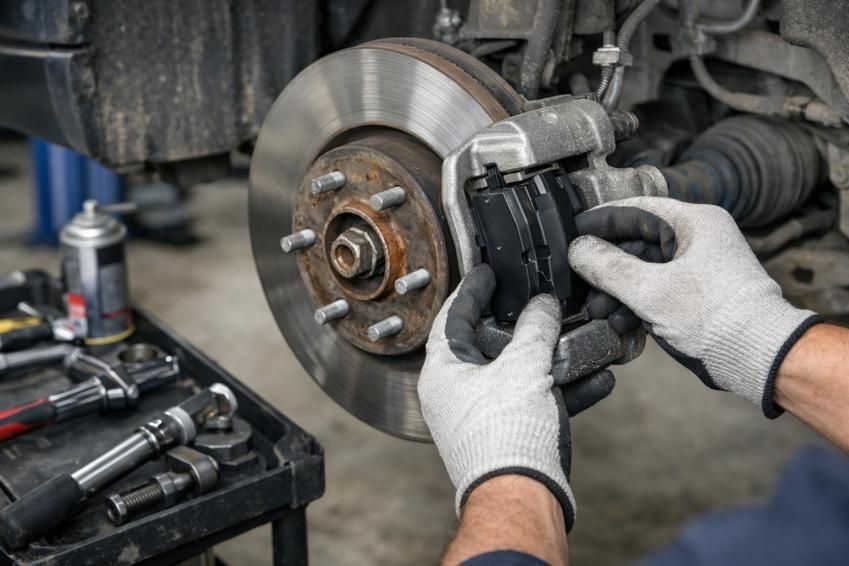
We remove the spent pads, clean and lubricate the caliper brackets, install replacement hardware clips, and fit low-copper pads matched to your vehicle's weight and driving. Then we bed them in so they grip evenly from day one.
Template premium 99
ROTOR SERVICE

Rotor Resurfacing and Replacement


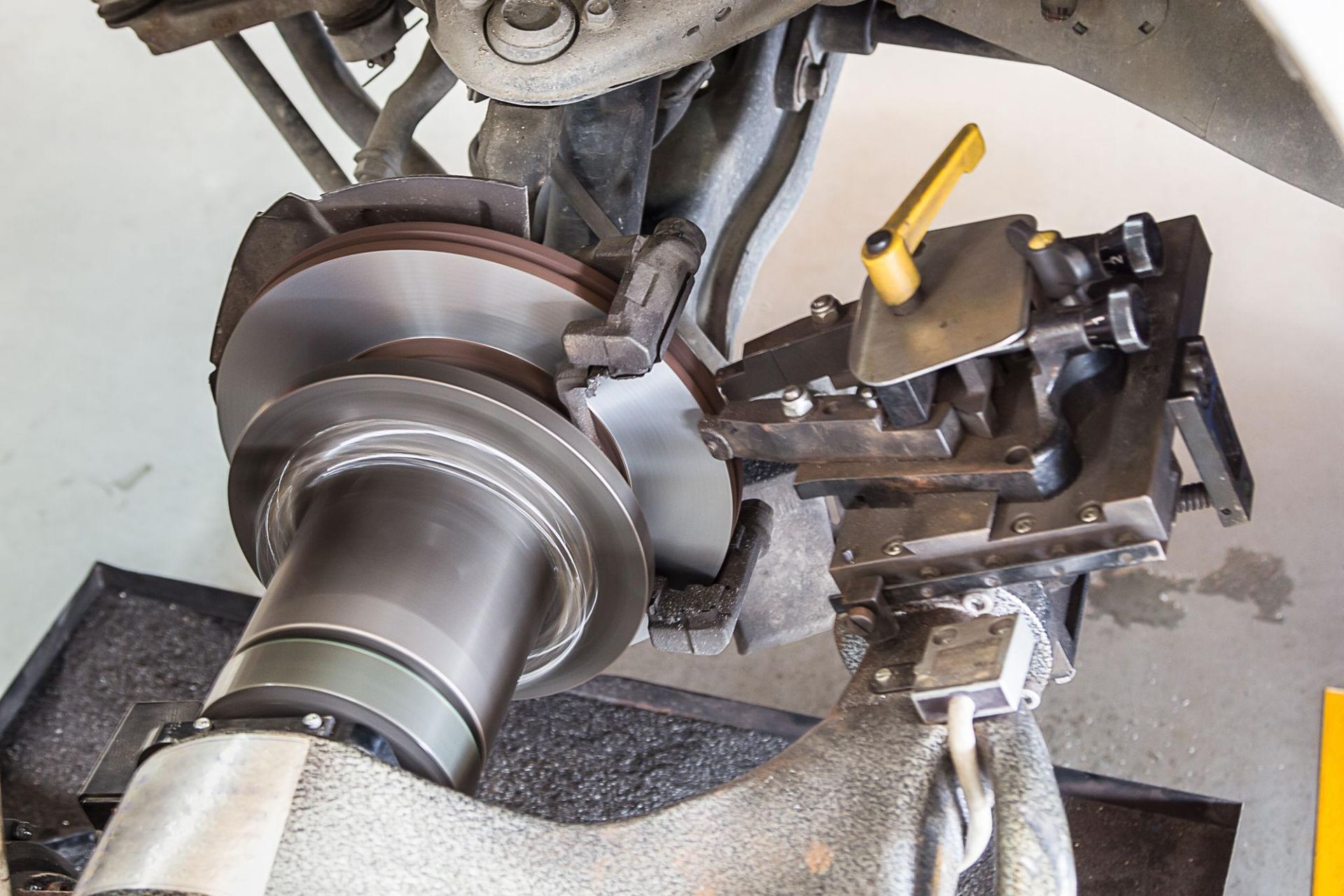
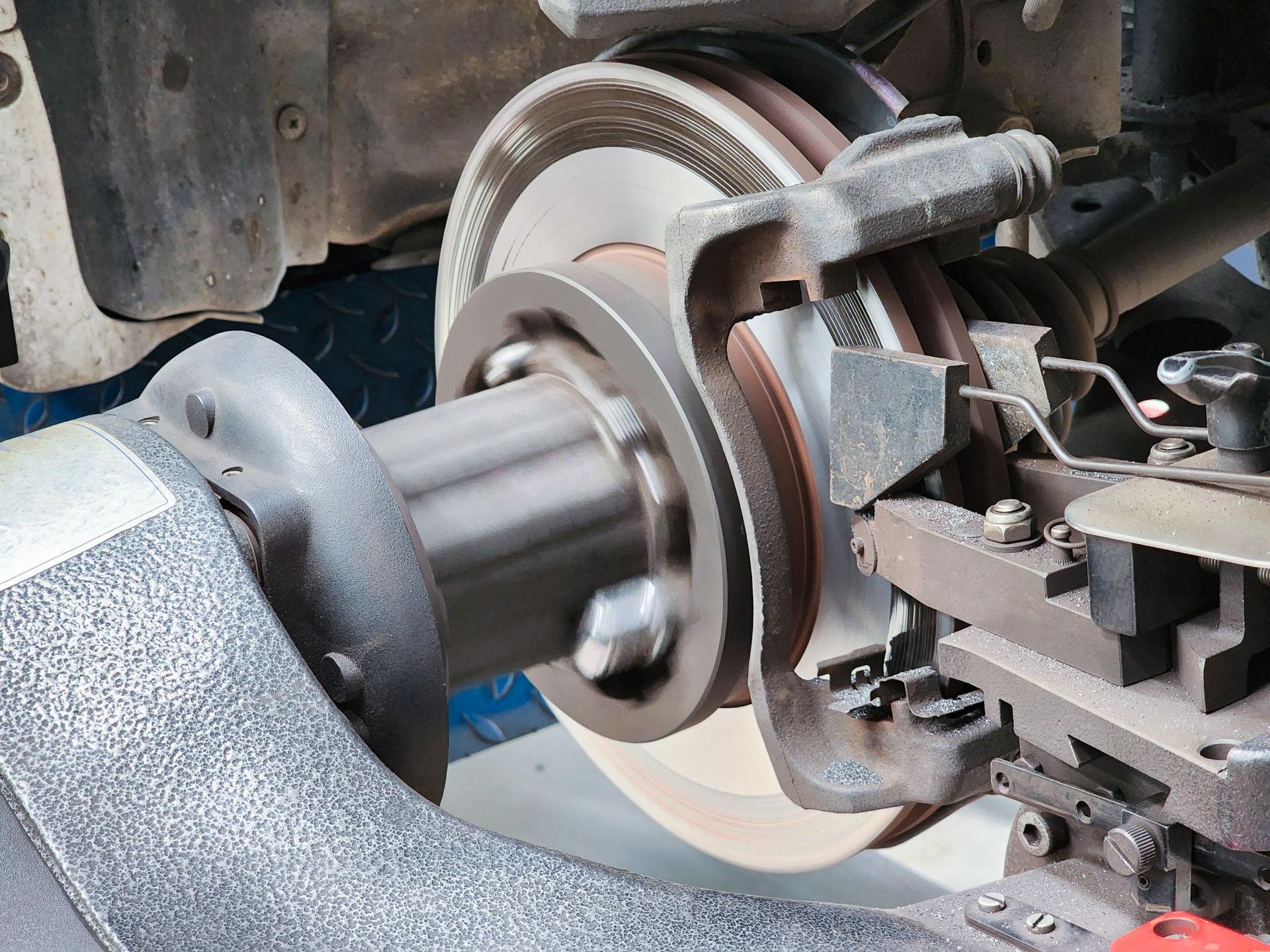
Every rotor gets measured with a micrometer against the minimum thickness cast into it. Rotors with enough material left can be machined to remove grooves and runout, and thin or heat-cracked ones get replaced.
Template premium 99
CALIPER REPAIR

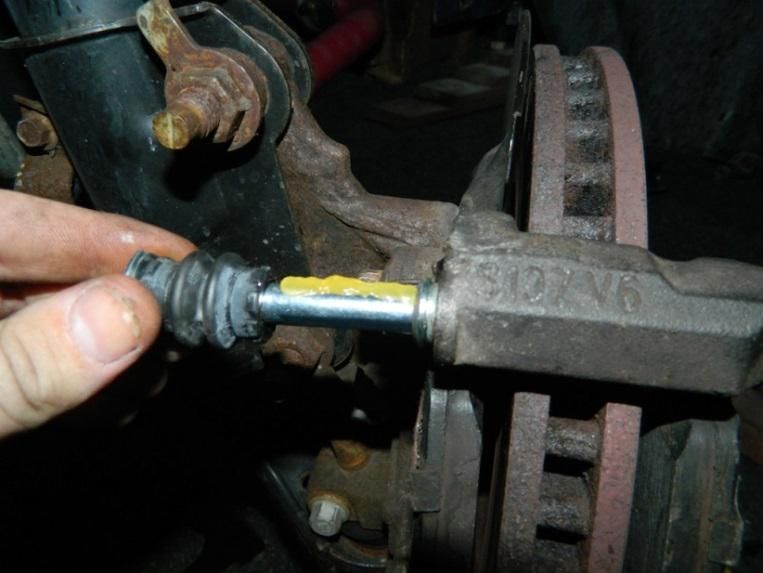
Caliper and Slide Pin Service


Seized pistons and sticky slide pins cause pulling, dragging, and lopsided pad wear. We free and lubricate the pins, replace torn boots, and swap out calipers that leak fluid or no longer retract.
Template premium 99
FLUID EXCHANGE

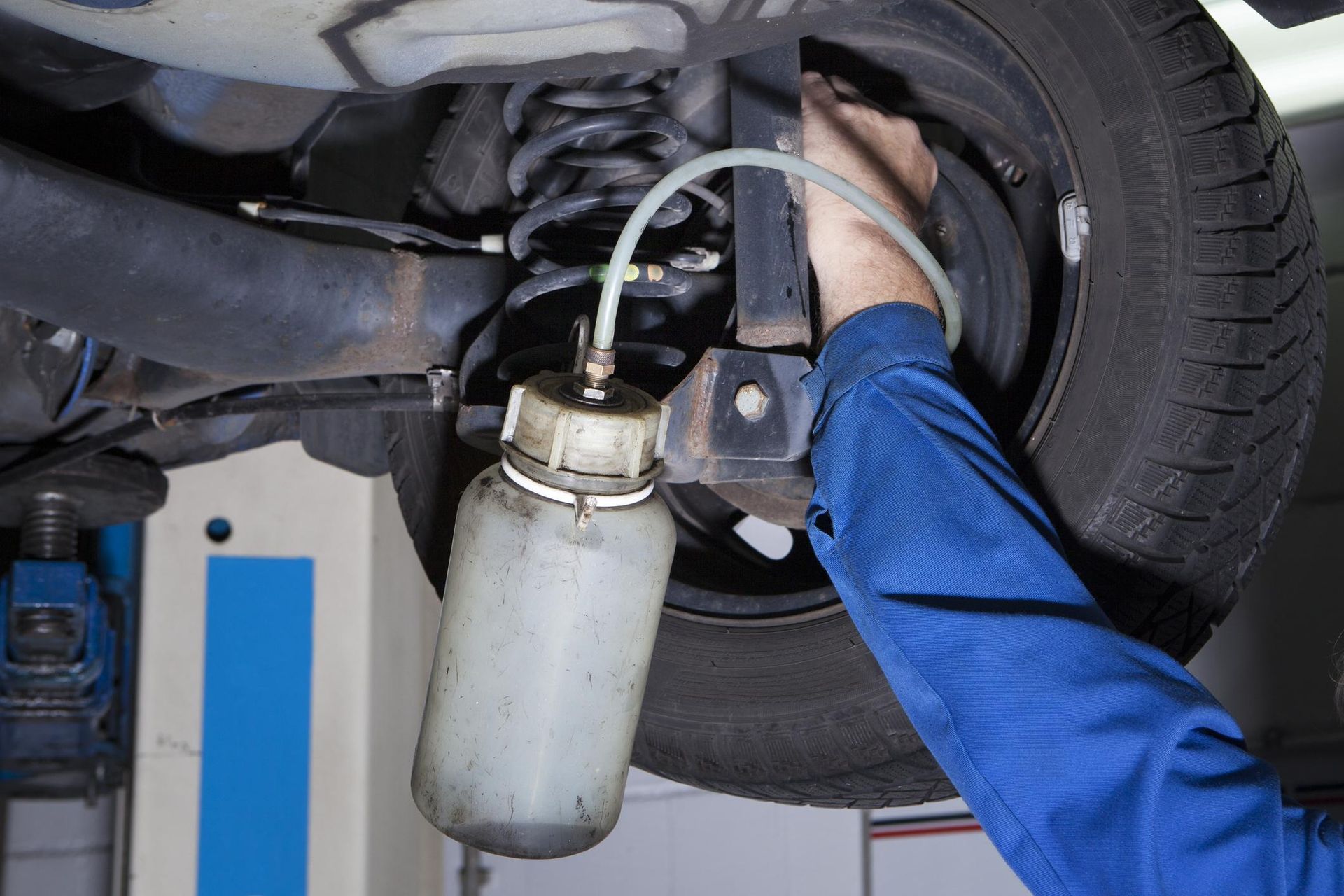
Brake Fluid Flush


DOT 3 and DOT 4 fluid absorbs moisture, often reaching 2 to 3 percent water within about 2 years, which lowers its boiling point. We test the fluid, then flush every bleeder until the fluid runs clear.
Template premium 99
REAR DRUMS

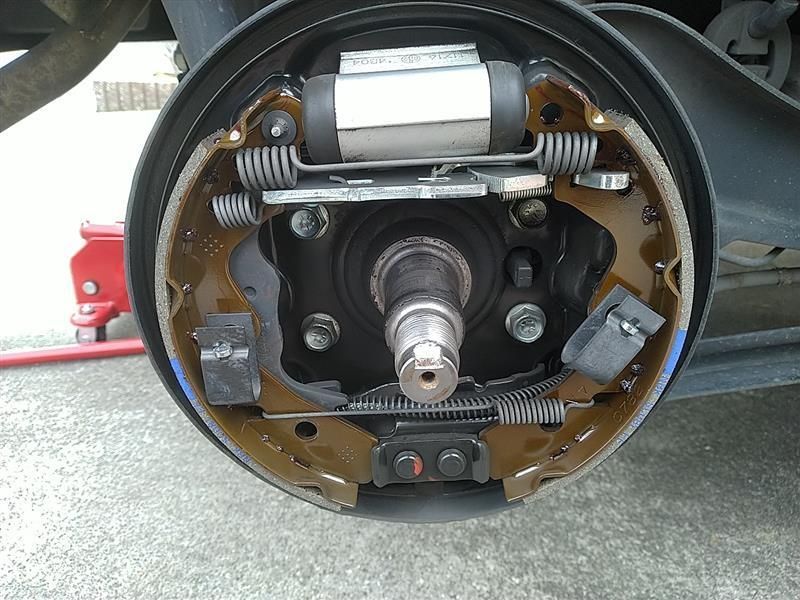
Drum Brake and Shoe Service


Many trucks and economy cars still use drums in the rear. We replace shoes, springs, and wheel cylinders as needed, adjust the shoes to spec, and confirm the parking brake holds the car on a grade.
Template premium 99
HYDRAULIC LINES

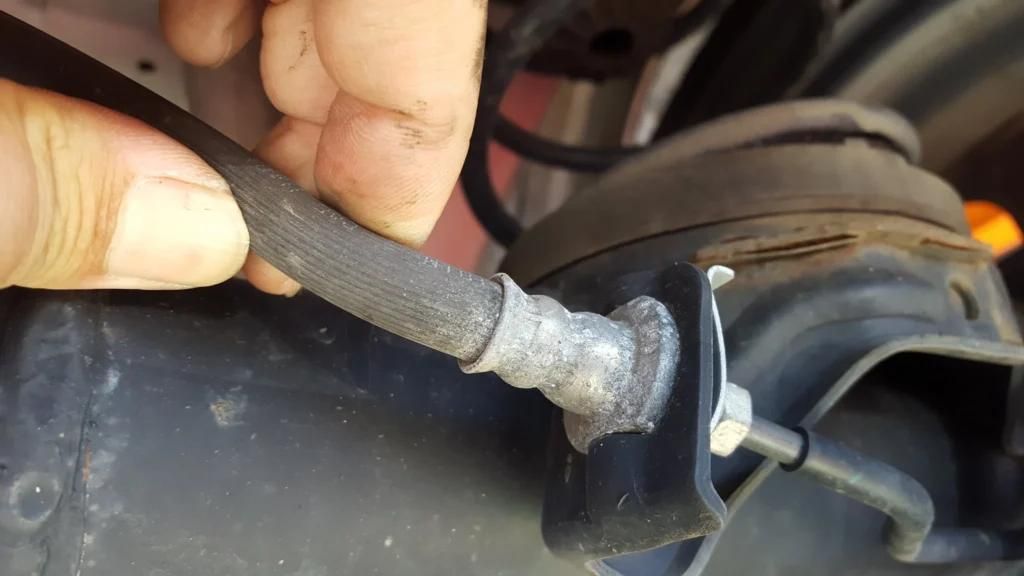
Brake Hose and Line Repair


Rubber hoses crack with age and heat, and steel lines corrode underneath the car. We inspect both from the master cylinder to each wheel, replace anything weeping or swollen, and bleed out trapped air.
Black horizontal line on a white background

THE WORD ON OUR WORK

WHAT OUR CLIENTS SAY.

Customers tend to mention the photos first. Seeing a cracked rotor or a pad ground down to the metal on a phone screen settles doubt about whether the repair is real. Others bring up the priority list, which let them handle the urgent item now and plan for the rest later.
Black horizontal line on a white background.

Common Questions

FREQUENTLY ASKED QUESTIONS.

Most brake questions begin with a sound or a strange feeling under your foot. These answers cover the ones we hear across the counter most often, from squeals and pulsing to pad life and rotor decisions.

    What is the difference between a brake squeal and a grinding noise?

    A squeal is usually a warning, while grinding usually means damage is already happening. Many pads carry a small metal tab that squeals when the lining runs low. Grinding often signals a backing plate scraping the rotor.

    How many miles do brake pads usually last?

    Lifespan varies too widely for one honest mileage number. Driving style, vehicle weight, and pad compound all change it, and heavy stop-and-go use or towing shortens it considerably. Measuring the lining at each oil change tracks wear reliably.

    Should rotors be resurfaced or replaced?

    That depends on how much metal remains. If a rotor still measures above its minimum thickness after machining and shows no heat cracks, resurfacing works. Below that minimum, or warped beyond correction, replacement is the safer choice.

    Why does my brake pedal pulse when I stop?

    Pulsing usually points to uneven rotor thickness, often called warped rotors. Pad deposits or heat damage create high spots that push the caliper pistons back with each rotation. Resurfacing or replacing the rotors usually cures it.

    What causes a soft or spongy brake pedal?

    Air or moisture in the hydraulic system is the most common cause. A leaking hose, a failing master cylinder, or old fluid that boiled under repeated braking can also let the pedal sink. Any of these deserves prompt inspection.

    Why does my car pull to one side when I brake?

    Unequal braking force between the left and right wheels creates the pull. A sticking caliper, a collapsed brake hose, or contaminated pads on one side are typical culprits, though loose suspension parts can mimic the symptom.

    Do the pads installed at Rubidoux Tire and Brake meet the California copper rule?

    Yes, every set does. Pads installed at Rubidoux Tire and Brake in Jurupa Valley, CA contain no more than 0.5% copper by weight, the limit in force since 2025. Ask to see the LeafMark rating printed on the box.

    Why choose Rubidoux Tire and Brake for brakes in Jurupa Valley, CA?

    You get measurements and photos instead of guesses. Rubidoux Tire and Brake pairs ASE-certified technicians with an A+ rating from the Better Business Bureau and 30+ years serving Jurupa Valley, CA, with findings explained in English or Spanish.

    Short black horizontal line on a white background
    The Benefits

    WHAT A PROPERLY DONE BRAKE JOB DELIVERS.

    STEP 01

    Shorter Stopping Distances
    Fresh pads against true rotors grab with full force from the first press. That margin matters most when the car ahead of you on the freeway stops without warning.

    STEP 02

    A Pedal You Can Trust
    Clean fluid and thoroughly bled lines give a firm, consistent pedal. You stop guessing how hard to push, and the car responds identically on a July afternoon and in January.

    STEP 03

    Quiet Stops
    Matched pads, lubricated hardware, and fresh shims eliminate most squeals and groans. Silence at the light is a sign the components are seated and working the way the engineers intended them to work.

    STEP 04

    Protected Rotors and Calipers
    Replacing pads before the friction material runs out keeps steel backing plates off the rotors. That one decision often saves the cost of a rotor set and spares the calipers from overheating.

    STEP 05

    Even Tire Wear
    Dragging calipers and uneven pad pressure scrub rubber off one tire faster than the rest. Balanced braking protects your tires and keeps the vehicle tracking in a line under hard stops.

    STEP 06

    Predictable Repair Costs
    Regular measurements show how fast your pads are wearing, so the next brake job arrives on a schedule you can budget for instead of as a grinding noise on the way to work.