Black horizontal line on a white background
Wheel Alignment
Three angles decide how your tires meet the pavement: toe, camber, and caster, and a single hard hit on a curb can push any of them out of specification. Rubidoux Tire and Brake handles alignments in Jurupa Valley, CA for cars, SUVs, and light trucks, domestic and import. On this page you will find how we measure and set those angles, when an alignment makes sense, how front-end and four-wheel alignments differ, which steering parts must be sound before adjusting, and how we fix an off-center steering wheel. Our ASE-certified technicians print readings before and after every adjustment, so you see the change in numbers.
Construction workers pouring concrete at a building site, with a truck in the background
Wet concrete pouring from a truck chute onto a construction site, forming a gravelly slab surface

TIRES KEEP SCORE OF EVERY ALIGNMENT PROBLEM.

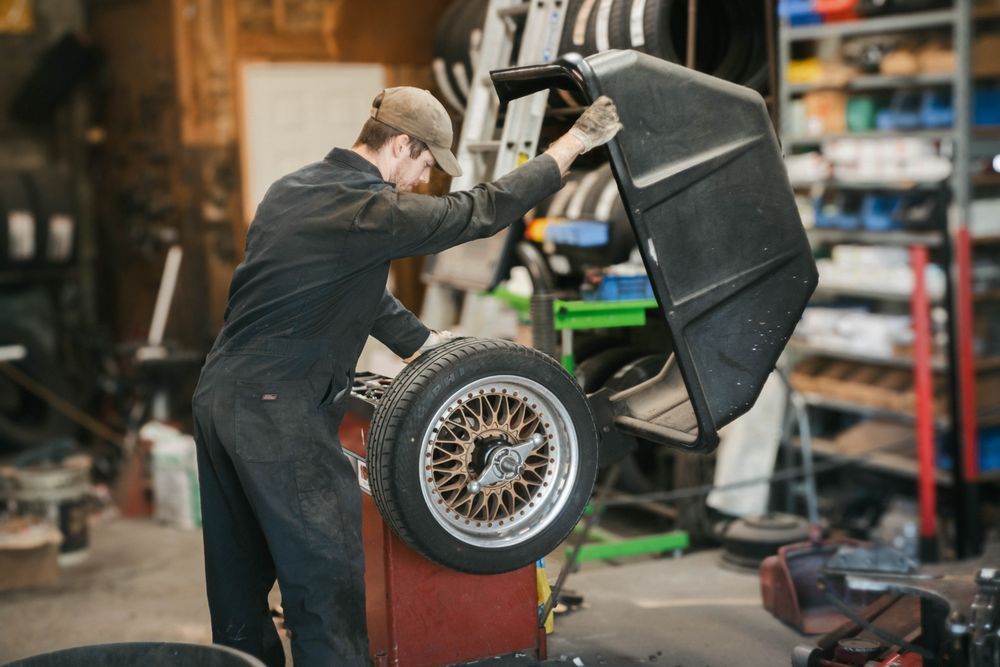
Read the edges of a tire and you can often name the alignment fault before the car touches the rack. Wear on the inner shoulder points toward camber or toe. Feathered tread that feels sharp when you run a hand one direction suggests toe. Scattered cupped spots usually mean something tired in the suspension, which an alignment alone will not fix. That is why tie rods, ball joints, and bushings get inspected before anything is adjusted. Setting angles on loose parts wastes your money, because the numbers drift the moment you leave.
  • Tire wear read before adjustment
  • Steering parts checked for play
  • Printed before-and-after readings
  • Wheel position confirmed on a test drive
Black horizontal line on a white background
ALIGNMENTS

TIRES THAT LAST AND A CAR THAT GOES WHERE YOU POINT IT.

A properly aligned car stops fighting you. You no longer hold the wheel slightly to one side on the freeway, the steering returns to center after a turn, and the tread wears evenly across its full width. That evenness matters to your budget, because a set of tires bald on one shoulder gets replaced while most of the rubber is still usable. Alignment is how you collect on the whole set.

FREEWAY MILES, SOFT SHOULDERS, AND CURBS ALL TEST YOUR ALIGNMENT.

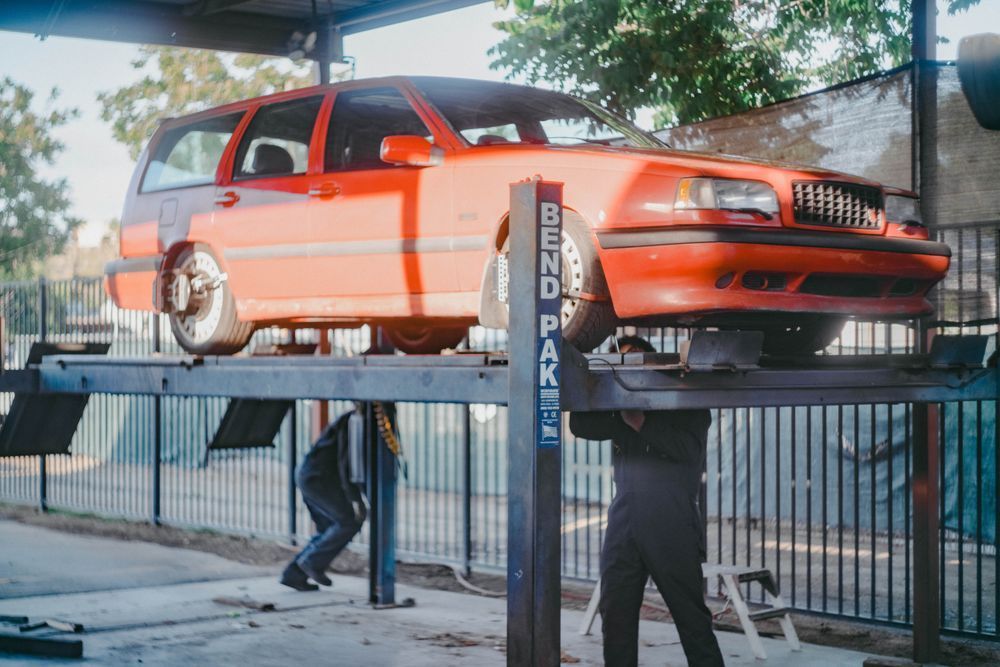
Local driving mixes two very different demands. On I-15 and Highway 60, a small toe error turns into a constant drift at freeway speed and steady scrubbing across every mile. Then the rural streets of Pedley and Glen Avon add soft shoulders, dirt edges, and the occasional pothole after a rain. Misjudge a curb in a crowded parking lot, and even a recent alignment can slip out of spec.

STRAIGHT STEERING WHEELS ARE A HABIT HERE.

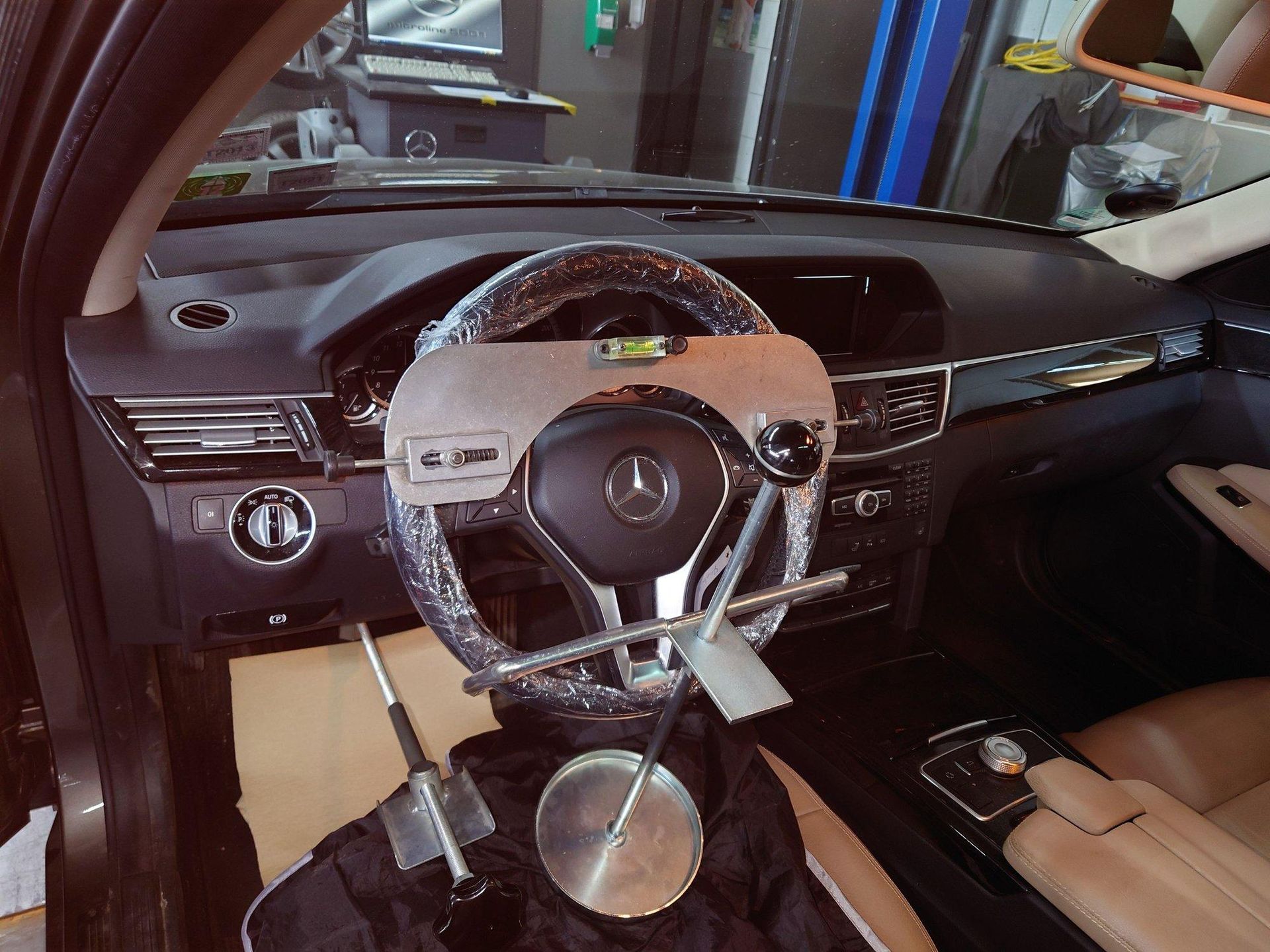
Getting the readings into the green is only part of the job. With 30+ years behind us, we know which vehicles need a special adapter, which trucks have adjusters that seize, and which cars still drift with perfect numbers because a tire is pulling. Every alignment gets a test drive, and we do not call it done until the wheel sits level on an open road. Tired of steering with the wheel tilted to one side?

FROM PRINTOUT TO PRINTOUT, HERE IS HOW.

Black car icon on a lift or jack stand, viewed from the front
WE ASK HOW THE CAR DRIVES
Does it pull, drift, wander, or sit with the wheel crooked? Those details, along with when the problem started, tell us whether to suspect a curb strike, a damaged part, or a tire issue before anything goes on the rack.
Black car on a car lift
WE INSPECT TIRES AND STEERING PARTS
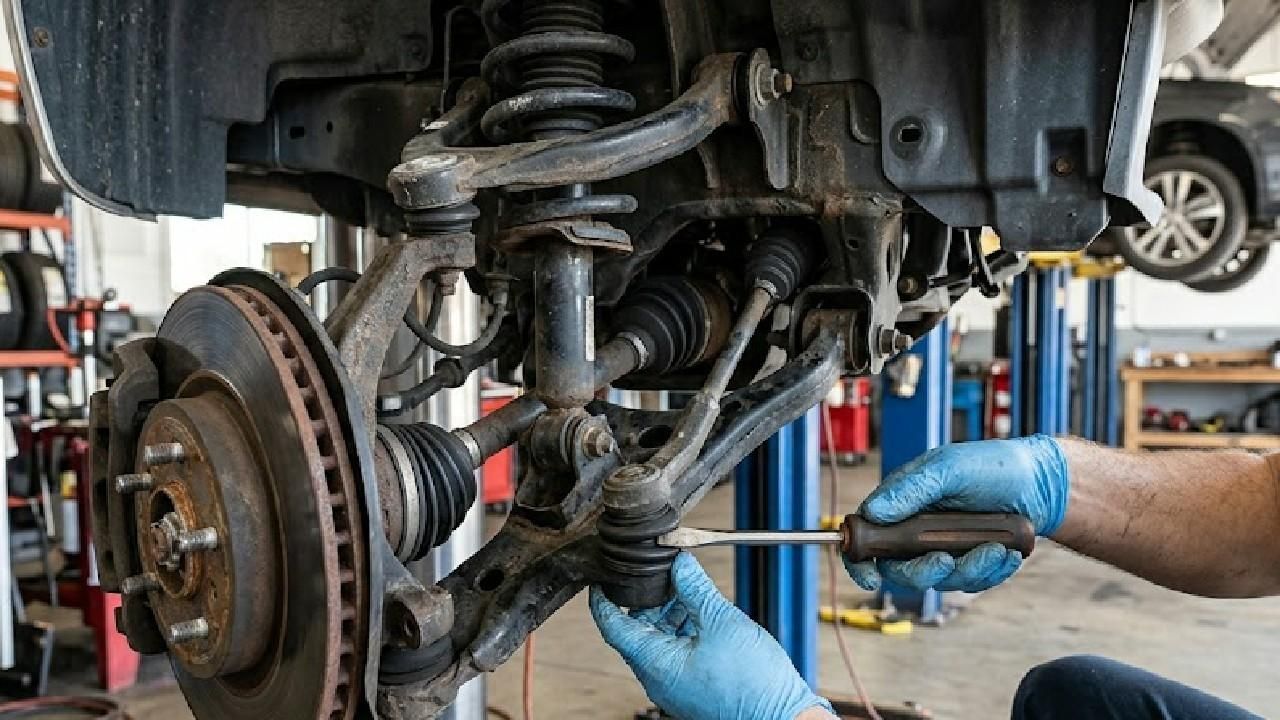
Each tire's wear pattern gets read, pressures get checked, and tie rods, ball joints, and bushings get tested for play. Anything with play is photographed and quoted first, since aligning around a failing part would not hold.
Black car icon on a lift, viewed from the front
WE PRINT THE BEFORE READINGS
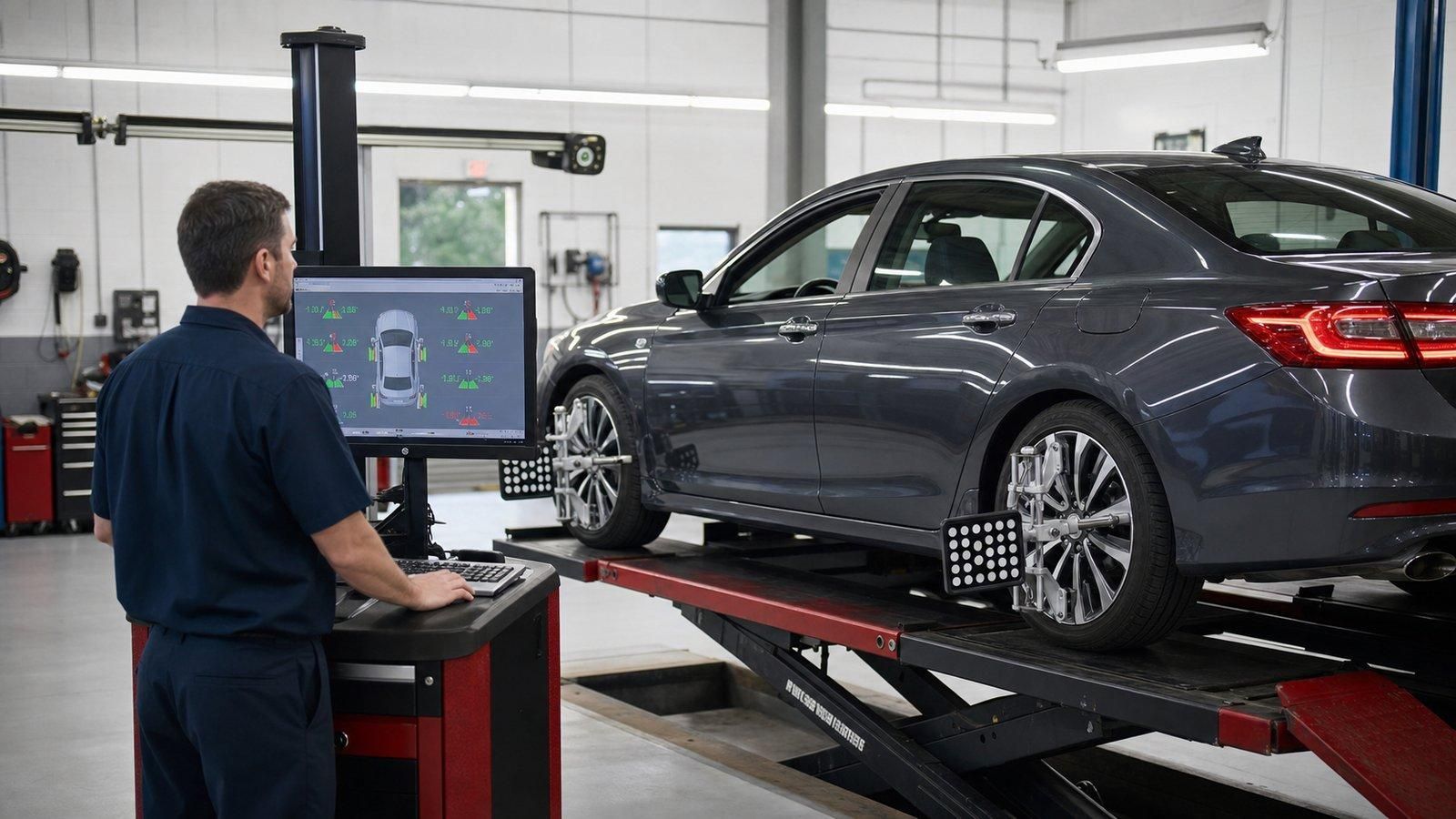
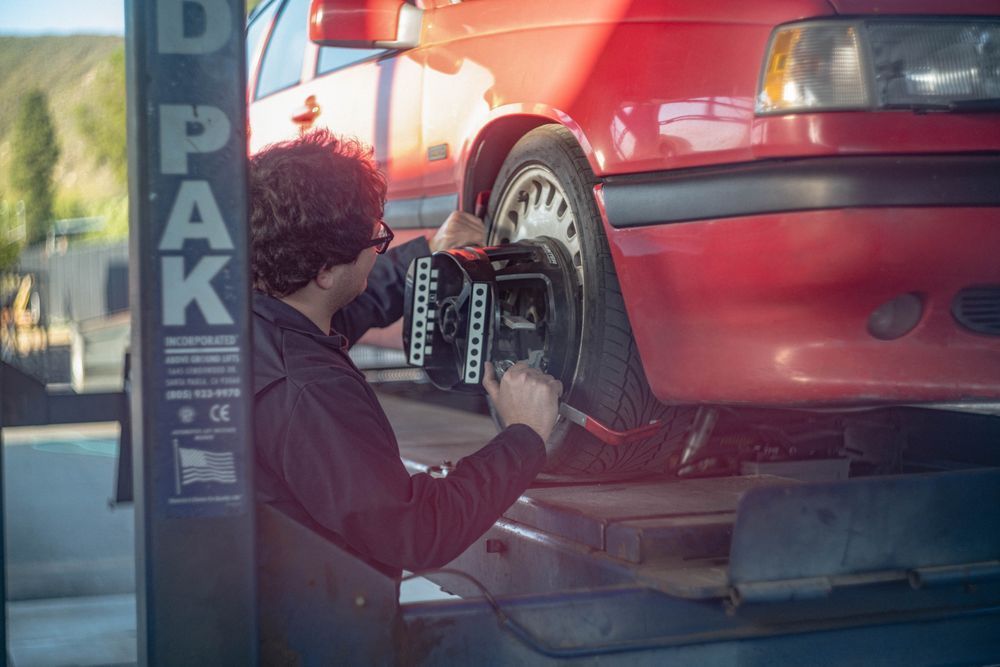
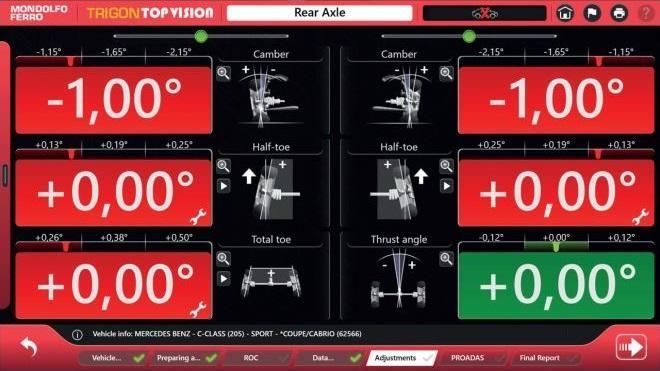
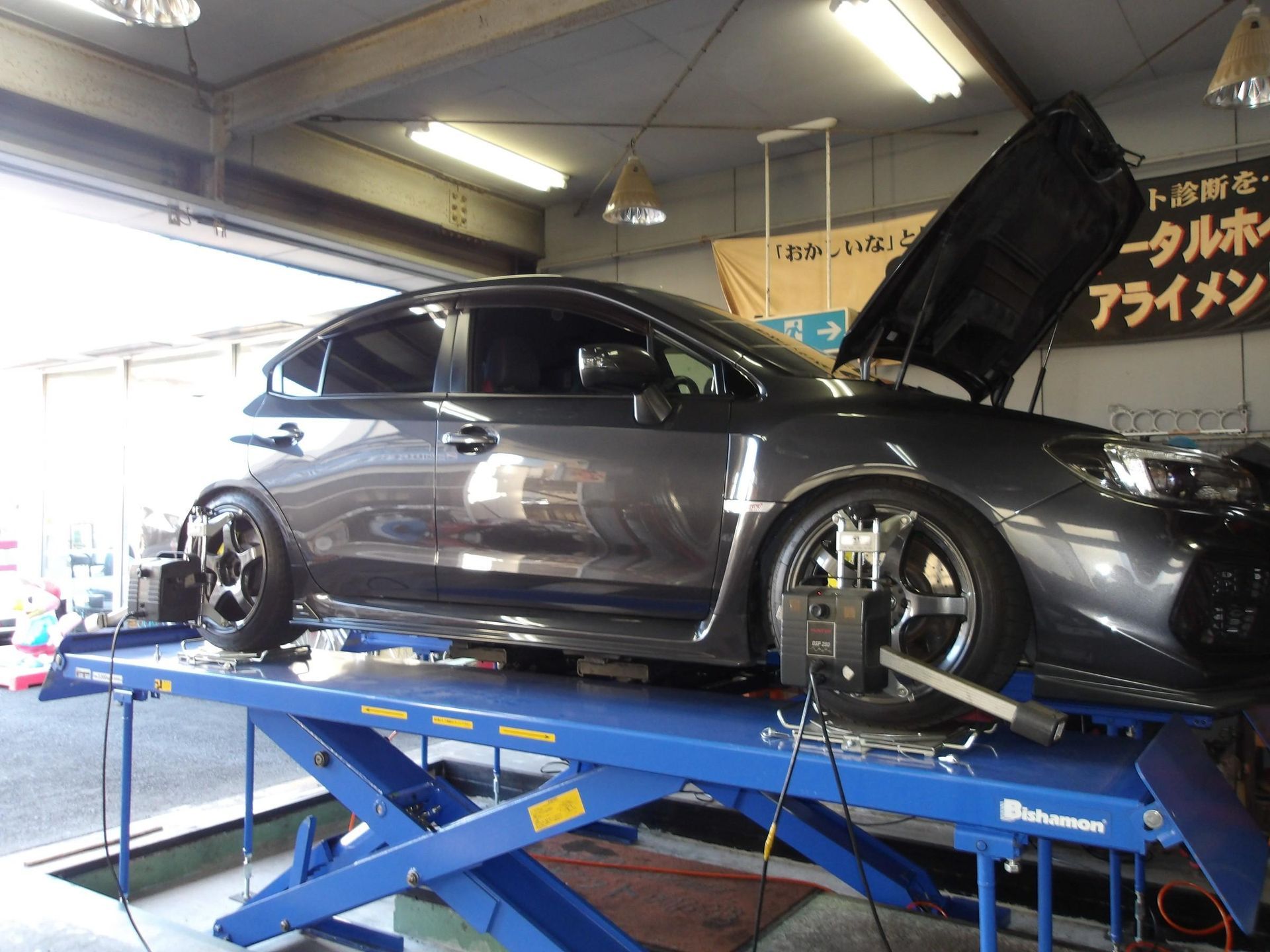
Sensors go on all four wheels, and the machine records toe, camber, and caster against the manufacturer's specification. You receive that first printout, so the starting point is documented on paper rather than simply described to you.
Black car icon on a lift, shown from the front.
WE SET THE ANGLES
Rear angles come first where the design allows, then the front, using the factory adjustment points. Seized adjusters get freed carefully, and any added labor waits for your approval, which California repair law requires.
Black car icon on a display lift stand, like a vehicle service or inspection symbol
WE PRINT THE AFTER READINGS
Once every angle sits within specification, the machine prints a second sheet. Side by side, the two printouts show exactly what moved and by how much, which is the clearest proof an alignment was actually performed.
Black car icon on a lift or jack stand, front view
WE DRIVE IT DOWN THE ROAD
Out on the road, a test drive confirms what the numbers promise: no pull, a centered steering wheel, and a steering return that feels natural. If anything is off, the car goes back on the rack before you get your keys.
Black horizontal line on a white background

our services

OUR ALIGNMENT WORK.

Several distinct jobs fall under alignment, depending on the vehicle and what the inspection finds. These are the services that fall under that heading, each one performed with readings recorded at every stage and shared with you.
Template premium 99
ALL FOUR

Four-Wheel Alignment


Most modern cars with independent rear suspension need all four wheels set. We adjust rear toe and camber first, then set the front angles to match, so every wheel points along the same centerline.
Template premium 99
FRONT END

Front-End Alignment


Vehicles with a solid rear axle only allow adjustment up front. We still measure the rear to confirm it tracks true, then set front toe, camber, and caster within the manufacturer's specification.
Template premium 99
THRUST ANGLE

Thrust Angle Alignment


When the rear axle cannot be adjusted, we align the front wheels to the direction the rear axle actually points. That keeps the vehicle from crabbing down the road and centers the steering wheel.
Template premium 99
WHEEL CENTERING

Steering Wheel Centering


An off-center steering wheel often comes from unequal toe on each side. We set each tie rod individually so the wheel sits square while the car travels in a straight line down the road.
Template premium 99
PARTS CHECK

Steering and Suspension Inspection


Worn tie rod ends, ball joints, control arm bushings, and strut mounts prevent a lasting alignment. We check each for play and photograph anything loose before recommending any adjustment or repair.
Template premium 99
POST REPAIR

Alignment After Parts Replacement


Replacing struts, tie rods, or control arms changes the suspension geometry. We align the vehicle after that work so the replacement parts and your tires do not wear unevenly from the first mile.
Black horizontal line on a white background

THE WORD ON OUR WORK

WHAT OUR CLIENTS SAY.

Printouts come up often. Customers like seeing the out-of-spec readings from before sitting next to the in-spec readings after, and many say the car finally drives the way they remember it driving when new. Others value hearing plainly when a tire, not the alignment, caused the pull.
Black horizontal line on a white background.

Common Questions

FREQUENTLY ASKED QUESTIONS.

Questions about alignment tend to arrive with a tire purchase, a pothole, or a steering wheel that suddenly sits crooked. Here is what drivers ask us most, so you know what to expect before you book.

    What is the difference between an alignment and wheel balancing?

    Alignment sets the angles of the wheels relative to the car and the road, while balancing evens out weight around each wheel and tire. A pull usually means alignment, and a vibration at speed usually means balance.

    Do I need an alignment after buying new tires?

    It is a smart move. Tires wear fastest when the angles are off, and an alignment protects that purchase from the first mile. It also confirms the previous set's wear was not caused by bent components.

    Why is my steering wheel off center when I drive on a flat road?

    Usually the toe settings on the two front wheels no longer match. A curb strike, worn tie rod ends, or a recent suspension repair done without an alignment afterward can all leave the wheel crooked.

    Do I need a front-end or four-wheel alignment?

    Your rear suspension decides. Cars with independent rear suspension need all four wheels set, while many trucks with a solid rear axle only adjust in front. We confirm which type your vehicle needs before quoting.

    Can hitting one pothole knock my alignment out?

    Yes, one hard impact can do it. A deep pothole or curb strike can shift toe or bend a tie rod, control arm, or wheel. A crooked wheel or a pull that was not there before is the clue.

    What do uneven tire wear patterns tell you?

    Wear patterns point toward specific problems. Inner or outer shoulder wear suggests camber or toe trouble, feathering across the tread points to toe, and patchy cupping usually traces back to shocks, struts, or balance.

    How long does an alignment take at Rubidoux Tire and Brake?

    The adjustment itself is a short job, but total time depends on what the inspection uncovers. At Rubidoux Tire and Brake in Jurupa Valley, CA, seized adjusters or failing parts add time, and we tell you before extra work begins.

    Why choose Rubidoux Tire and Brake for alignments in Jurupa Valley, CA?

    Every adjustment comes with printed proof. Rubidoux Tire and Brake combines before-and-after readings with ASE-certified technicians, an A+ BBB rating, and 30+ years serving drivers in Jurupa Valley, CA in English and Spanish.

    Short black horizontal line on a white background
    The Benefits

    WHAT A PRECISE ALIGNMENT PAYS BACK.

    STEP 01

    Longer Tread Life
    With toe and camber in spec, each tire wears evenly across its width. You use all the tread you paid for instead of replacing a set early because one shoulder went bald.

    STEP 02

    Relaxed, Hands-Light Steering
    No more holding constant pressure on the wheel to keep the car in its lane. Correct geometry lets the vehicle track true, which makes long freeway drives noticeably less tiring.

    STEP 03

    Less Rolling Resistance
    Sideways scrub creates drag the engine has to overcome. Removing that resistance lets the car roll more freely, which helps fuel economy on daily commutes and weekend trips alike.

    STEP 04

    Predictable Handling
    Caster set to spec helps the steering return to center and stay stable at speed. The car responds predictably in lane changes and emergency maneuvers, exactly when control matters most to you.

    STEP 05

    Protected Suspension Parts
    Misalignment loads tie rods, ball joints, and wheel bearings unevenly. Keeping the geometry within specification reduces that added stress and helps those components reach their normal service life without early failure.

    STEP 06

    A Steering Wheel That Sits Right
    Crooked spokes are more than a cosmetic annoyance, since they signal the angles no longer match each other. Setting them properly brings the wheel back to center, so the logo sits upright on every commute.